

When people think about the wedding industry, they often picture breathtaking décor, spectacular venues, elegant celebrations and unforgettable guest experiences. While creativity is undoubtedly an important part of wedding planning, it represents only one side of the profession. Behind every beautifully executed wedding is a business that depends on planning, pricing, teamwork, communication and responsible financial management.
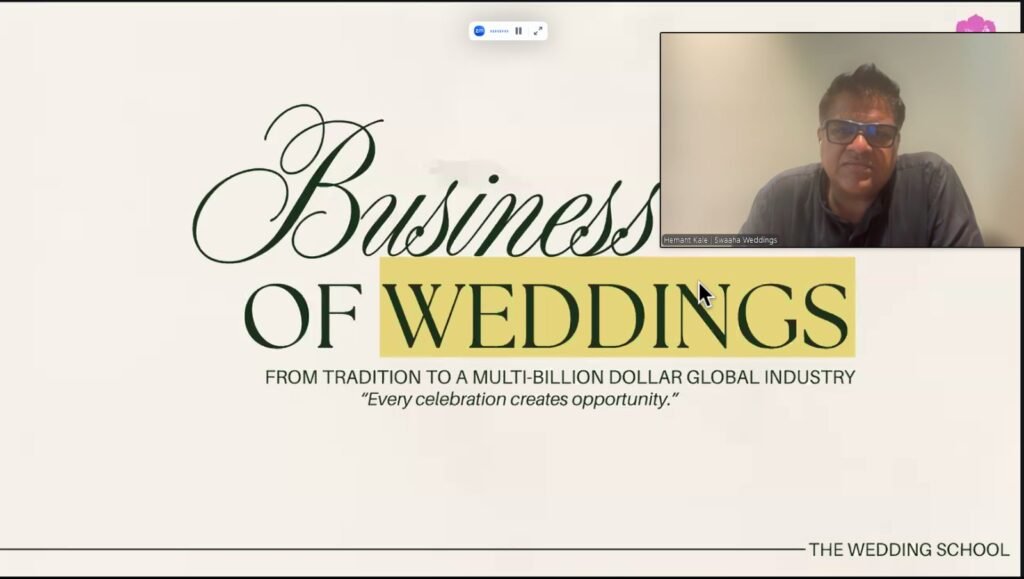
This important distinction formed the foundation of the Business of Weddings session conducted by Hemant Kale at The Wedding School. The session encouraged students to look beyond the visible glamour of weddings and understand what it truly takes to build and manage a sustainable wedding planning business.
A successful wedding professional must know how to turn creative ideas into well-planned services, build dependable industry relationships and deliver consistent value to clients. Creativity may attract attention, but business knowledge is what enables a wedding company to survive, grow and remain profitable.
Understanding Your Purpose in the Wedding Industry
The session began with a simple but powerful question: Why do you want to enter the wedding business?
There is no single correct answer. Some individuals are attracted to the industry because they enjoy creativity and celebration. Others want to become entrepreneurs, travel to different destinations, work with diverse people or build a financially rewarding career.
Understanding this purpose is essential because it influences almost every future business decision. It affects the type of clients a planner wishes to serve, the scale of weddings they want to manage and the services they eventually offer.
Someone passionate about intimate celebrations may build a boutique wedding planning company. Another professional may choose to specialise in destination weddings, luxury décor, wedding hospitality or entertainment management. A person interested in systems and logistics may excel in production, vendor coordination or large-scale event management.
Purpose brings clarity. It helps aspiring professionals move beyond the broad idea of “working in weddings” and begin identifying the exact space they want to create for themselves.
Wedding Planning Is a People-First Business
Weddings are emotionally significant occasions involving not only the couple but also their families, friends and communities. This makes wedding planning deeply personal and relationship-driven.
A professional planner must learn how to listen carefully, ask relevant questions and understand expectations that may not be clearly stated in the initial brief. Clients may describe the colours, venue or number of guests they want, but meaningful conversations reveal deeper priorities.
They may want the wedding to reflect their cultural background, honour a family tradition, accommodate elderly guests or recreate an important memory. These emotional details can completely change the planning and design direction.
This is why emotional intelligence is a vital wedding-planning skill. A planner must know when to guide, when to listen and when to manage disagreements calmly. Clients should feel understood and reassured throughout the planning journey.
Creativity creates exciting ideas, but trust encourages clients to approve those ideas. Strong relationships also lead to recommendations, repeat business and long-term credibility within the wedding industry.
Turning Passion into a Profitable Wedding Business
Passion can motivate a person to begin a career, but passion alone cannot sustain a business. Every wedding planning business must generate enough revenue to cover its costs, support its team, maintain service quality and earn a reasonable profit.
Aspiring planners must understand the difference between revenue and profitability. A large project may appear financially impressive, but it may not be profitable if the company fails to account for team salaries, travel, office expenses, vendor payments, taxes and last-minute requirements.
Pricing should therefore be based on the actual scope of work. A planner must evaluate the size of the wedding, number of functions, guest count, destination, planning duration, team requirement and level of responsibility before sharing a professional fee.
Charging without understanding these elements can result in overpromising, poor service delivery and financial loss. A sustainable business requires commercial awareness, transparent pricing and disciplined expense management.

Client Acquisition and Brand Positioning
Even the most talented wedding planner needs a consistent method of finding suitable clients. Client acquisition may happen through digital marketing, social media, industry networking, referrals, hotel relationships, vendor recommendations and previous client testimonials.
However, visibility alone is not enough. A business also needs clear positioning.
Brand positioning communicates what the company does, who it serves and why its approach is different. A wedding company may position itself around luxury destination weddings, culturally rooted celebrations, sustainable décor, intimate events or highly personalised guest experiences.
Clear positioning helps clients understand whether the planner is right for them. It also allows the business to build specialised knowledge and communicate more confidently.
A planner should not attempt to accept every type of project without considering whether it matches the company’s capabilities, values and resources. The right clients contribute not only to revenue but also to a stronger portfolio and reputation.
Budgeting, Pricing and Profit Margins
Budget management is one of the most important responsibilities in a wedding planning business. Clients expect planners to help them allocate money intelligently across venues, décor, hospitality, entertainment, food, invitations, gifting, logistics and technical production.
At the same time, planners must protect their own business margins.
A professional quotation should clearly define the services included, payment schedule, taxes, reimbursable expenses and conditions for additional work. Any change in guest count, venue, function requirements or creative scope should be documented and costed appropriately.
Planners must also monitor the cash flow of every project. Vendor advances may be due before a client’s next instalment, making payment planning extremely important. A project can be profitable on paper and still create financial pressure when receipts and payments are poorly scheduled.
Sound financial management gives the business stability and prevents creative decisions from becoming commercial risks.
Vendor Relationships and Negotiation
No wedding planning company works independently. Every celebration requires a network of venues, decorators, caterers, photographers, entertainers, choreographers, technical teams, transport partners and numerous other specialists.
A wedding planner must therefore develop strong vendor-management skills. Selecting a vendor should not be based only on the lowest quotation. Reliability, quality, communication, capacity, experience and problem-solving ability are equally important.
Negotiation should also be approached professionally. The objective is not to reduce every vendor’s price unrealistically but to arrive at fair commercial terms that protect the client’s budget without compromising delivery.
Strong vendor relationships can become one of a wedding company’s greatest assets. Trusted partners are more likely to support urgent requests, maintain quality standards and work collaboratively when unexpected challenges occur.
Team Management and Delegation
As a wedding business grows, the founder cannot personally manage every task. Building a dependable team and learning to delegate become essential.
Each member should understand their responsibilities, reporting structure, timelines and decision-making authority. Detailed briefs, checklists and regular reviews help prevent important information from remaining with only one person.
Delegation does not mean giving away responsibility. It means assigning work clearly while maintaining accountability. A capable leader sets expectations, gives the team the information and resources required, and checks progress at the appropriate stages.
Professional team management creates consistent service and allows a wedding planning business to manage multiple projects without depending entirely on its founder.
Systems, Documentation and Service Consistency
Clients experience a wedding through emotions, but the planning team executes it through systems. These systems may include enquiry forms, client questionnaires, proposals, contracts, budgets, vendor trackers, payment schedules, guest lists, rooming lists, production timelines and event-day checklists.
Documentation protects both the planner and the client. Written approvals reduce confusion, while defined processes ensure that important tasks are completed on time.
Systems also make it easier to train new team members and maintain consistency. When every project follows a dependable process, the company becomes more organised and scalable.
The goal is not to remove creativity. It is to create a strong operational structure that allows creativity to be executed confidently.
Destination Weddings and Expanding Opportunities
Destination wedding planning can open doors to a much wider professional network. Planners may collaborate with hotels, tourism boards, transport companies, local vendors and hospitality teams across different cities and countries.
However, destination weddings also bring greater responsibility. Travel logistics, accommodation, permissions, local regulations, vendor availability, weather conditions and cultural expectations must all be considered.
For professionals with the right preparation, this area offers opportunities for travel, networking and business growth. It also teaches planners how to adapt their services to unfamiliar locations while maintaining consistent standards.
Building an Industry-Ready Mindset
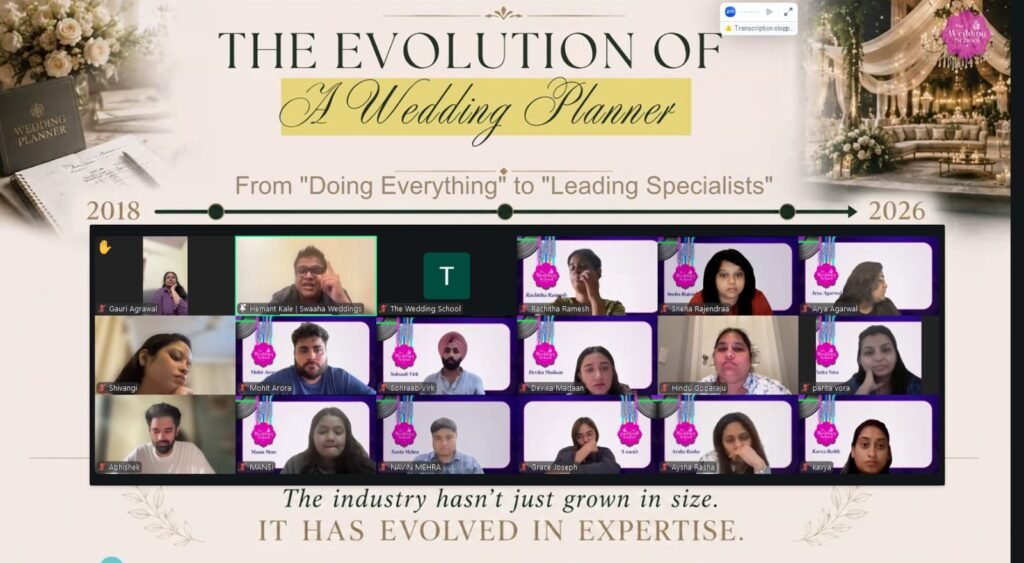
The central learning from Hemant Kale’s session was that wedding professionals must balance imagination with commercial intelligence.
A planner should be able to understand a client’s emotions while protecting the project scope, create exciting concepts while respecting the budget, and maintain vendor relationships while negotiating responsible terms.
The strongest professionals are not only creative thinkers. They are communicators, financial planners, negotiators, team leaders and problem-solvers. They understand that every beautiful wedding must also be operationally manageable and commercially viable.
Conclusion
The wedding industry offers tremendous opportunities for creative and ambitious professionals, but lasting success requires more than passion. It demands purpose, people skills, financial understanding, strong documentation, dependable partnerships and disciplined execution.
Learning the business of of weddings allows aspiring planners to move from simply contributing to events to building careers and companies that can grow sustainably.
Through expert-led sessions such as Business of Weddings, students at The Wedding School gain insights into both the creative and commercial realities of the profession. Its live online and hybrid courses in Wedding Planning and Wedding Décor Design help students develop practical knowledge, industry confidence and a business-ready mindset. For anyone aspiring to build a meaningful career in wedding planning or event management, The Wedding School provides a strong platform from which to begin.