
A wedding may be celebrated over a few days, but for a professional wedding planner, the journey begins much earlier. It starts with winning the client, understanding the family, studying the venue, building the experience, creating timelines, coordinating vendors and preparing the team long before the first guest arrives.
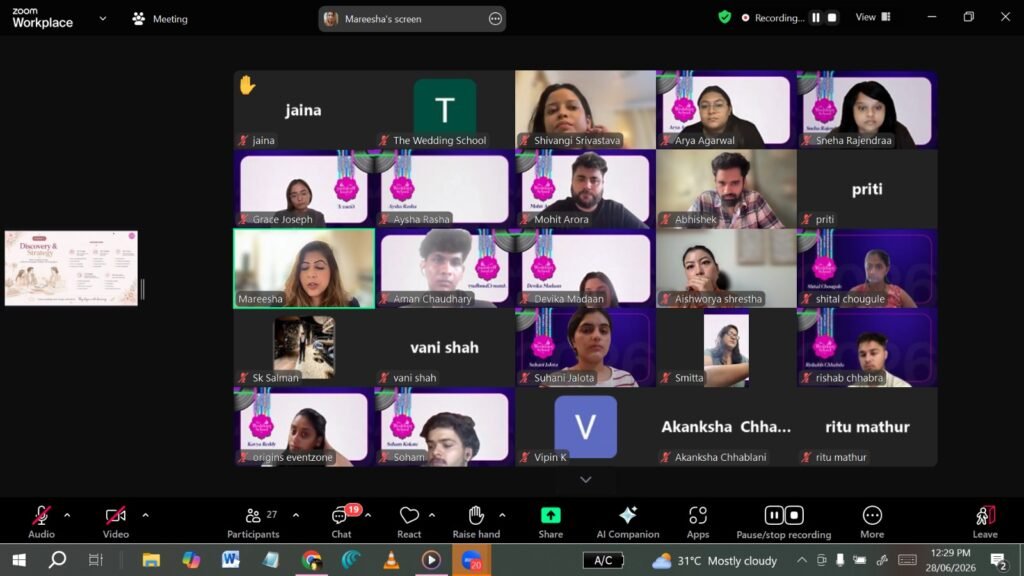
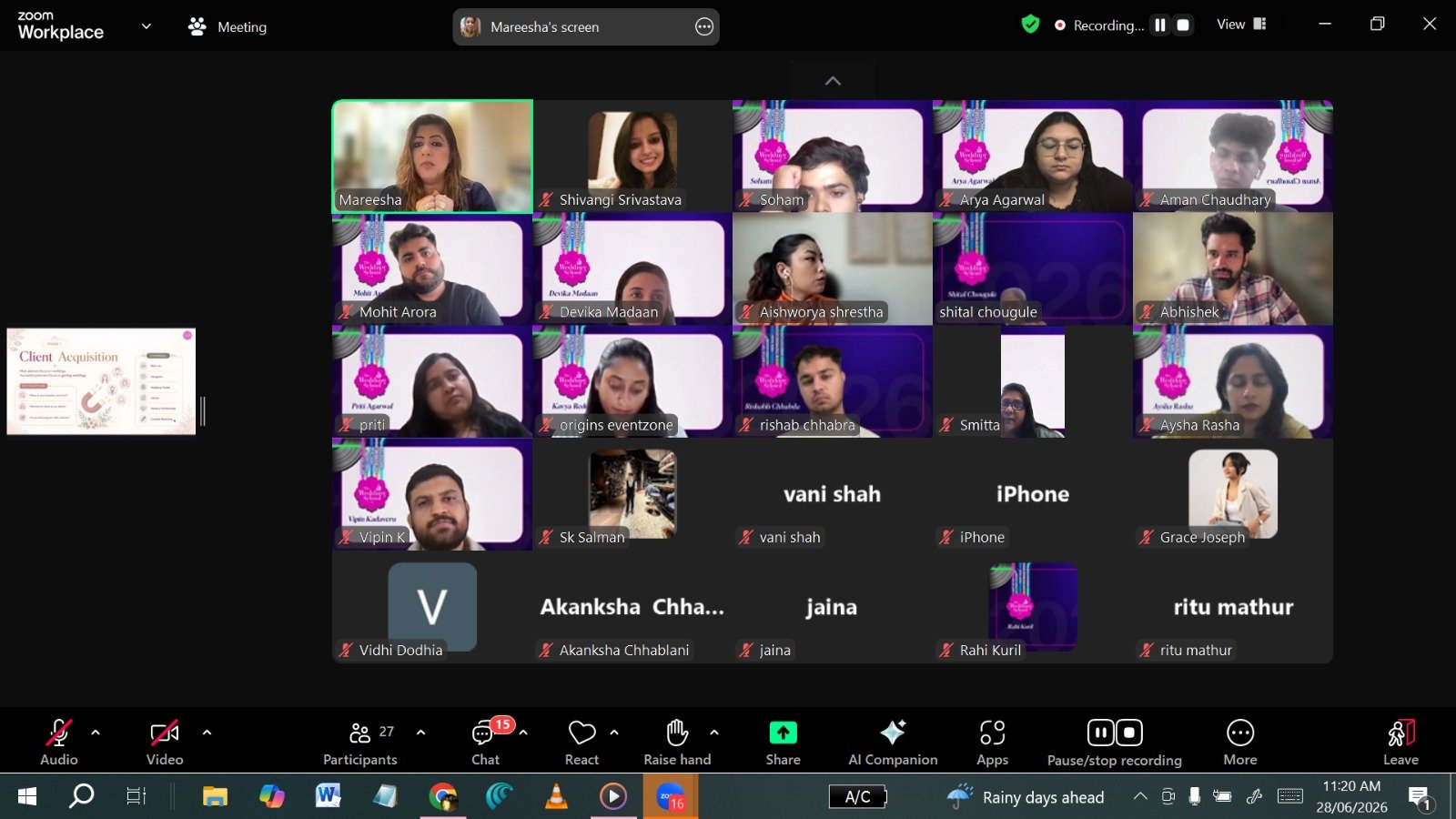
This complete lifecycle formed the focus of a recent Phases of Wedding Planning session at The Wedding School, led by Mareesha Parikh, Founder & CEO of The Wedding School.
Drawing from years of industry experience, the session went beyond textbook planning and explored the decisions, relationships and systems that shape a wedding from the first enquiry to the final closure.
One of the central lessons was simple: wedding planning is not only about creativity. A planner has to think like a professional, a problem-solver and, in many ways, an entrepreneur—whether running a business independently or working within a wedding planning company.
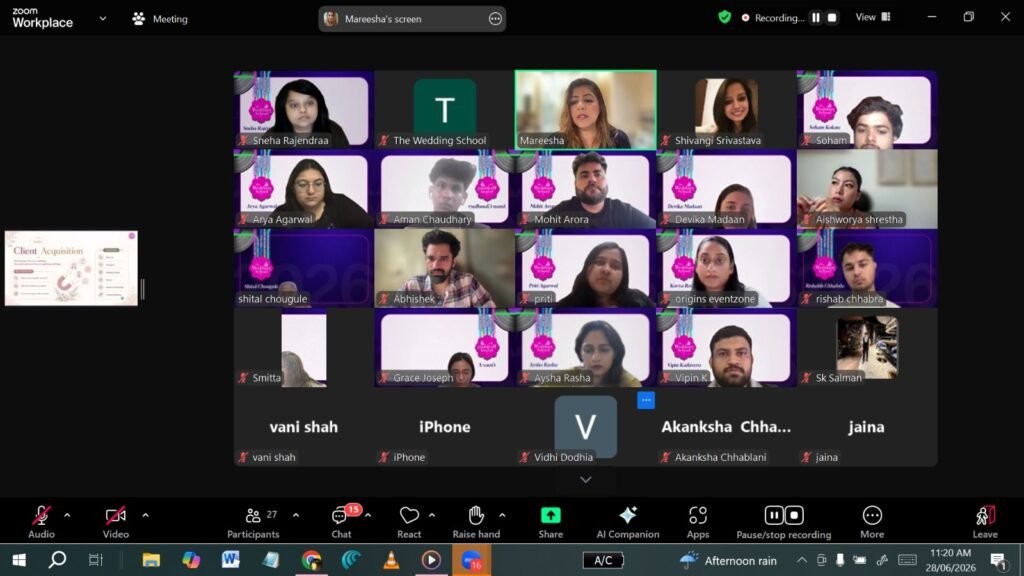
Phase 1: Client Acquisition — Where the Wedding Journey Really Begins
Before there is a brief, there has to be a client.
For emerging wedding planners, the first opportunities may come through referrals, personal networks, Instagram, wedding portals, hotels, venues or industry connections. The session encouraged students to value even smaller opportunities—an engagement, proposal, festive celebration or intimate family event can become the beginning of a professional portfolio.
The larger lesson is to build visibility before expecting enquiries.
For newer planners, referrals and organic social media can often be more relevant than immediately spending heavily on paid portals. As experience grows, marketing channels can evolve.
Wedding planning is a relationship-driven business, and professional recall takes time.
Phase 2: Conversion — Turning an Enquiry into Trust
A query does not automatically become a wedding.
Today’s families may meet several planners before finalising one. That means the first interaction has to create confidence without appearing over-eager.
The initial conversation should naturally uncover the essential details:
- Wedding date
- Venue status
- Bride and groom’s cities
- Destination preferences
- Number of functions
- Family structure and key decision-makers
But the session strongly emphasised that these questions should not sound like an interrogation.
A planner has to learn how to build conversation while collecting information.
The setting also matters. A Zoom meeting, family home, office or café may each involve different decision-makers and demand a slightly different style of communication and presentation.
For a client, the question is not simply, “Does this planner have good ideas?”
It is also, “Can I trust this person with my family?”
A Real Classroom Question: How Do You Break the Ice?
One of the students raised a very practical concern: what happens when you are in a client meeting before your senior or manager arrives and there is nothing obvious to talk about?
The discussion that followed was one of the most useful parts of the session.
With a younger couple, conversation can begin around their day, restaurants, travel, décor, entertainment or weddings they have attended. With parents and elders, hometowns, family backgrounds and travel can create easier entry points.
The purpose is not meaningless small talk.
It is to make the client comfortable enough to speak—and often, those casual conversations reveal more useful information than a formal questionnaire.
Phase 3: Discovery — Understanding the Family Behind the Brief
Good wedding planning begins when the planner learns to notice what the client is not directly saying.
Does the family react more strongly to décor references? Do they immediately ask about artists? Are they repeatedly concerned about hospitality and room check-ins? Does someone keep returning to timelines?
Even destination choices can reveal something important.
A family may reject Goa because several weddings have already happened there. Udaipur may not feel aspirational to someone because it is their hometown.
These observations influence the direction of the wedding.
During the session, Mareesha encouraged students to pay attention to who leads the conversation, who influences decisions and what different family members respond to.
That information should then be formally documented rather than left to memory.
Phase 4: Document Everything — The Importance of MOMs
One of the practical systems discussed was the Minutes of Meeting, or MOM.
Wedding planners may handle several projects simultaneously. Six months later, no one can reliably remember every detail from every family conversation.
A MOM becomes the record of what was discussed, agreed, observed and required.
It may capture:
- Family preferences
- Important decisions
- Venue discussions
- Guest numbers
- Action points
- Responsibilities
- Timelines
- Follow-ups
This is where professional wedding planning moves away from memory and into systems.
And systems become especially important as the number and scale of projects increase.
Phase 5: Strategy — Designing More Than Décor
Once the client is understood, the planner begins shaping the experience.
In this context, “design” does not refer only to flowers, colours or décor themes.
The planner is also designing:
- Guest experience
- Entertainment flow
- Food experience
- Hospitality
- Invitations
- Family movements
- Function sequencing
- Personalisation
A successful planner must also know when to accommodate the client and when to stand firm.
Creative preferences are subjective. A client may choose an entertainer or décor direction the planner would not personally recommend.
However, technical safety and logistics are different.
The session stressed that planners cannot casually compromise in areas that may affect guest comfort or safety. Production structures, transport quality and technical execution require professional responsibility.
Phase 6: Venue Recce — Learning to Read a Space Professionally
Once the project is confirmed, the venue needs to be studied carefully.
A wedding venue recce is much more than taking pictures of a ballroom.
The planner begins reading the property from the guest’s point of view—arrival, porch, lobby, event spaces, transitions and movement.
If the venue has already been selected, the planner may visit independently instead of asking the family to return.
Students were also encouraged to continuously research hotels and venues even before receiving a client enquiry.
The exercise recommended during the session was simple: regularly study new properties, save the information and gradually build a personal database.
That knowledge eventually allows a planner to speak about destinations and venues with far greater confidence.
Phase 7: Timelines — Never Promise What You Cannot Deliver
One of the strongest professional lessons from the session concerned timelines.
Young planners often make the mistake of giving aggressive deadlines simply to impress a client.
But promising décor closure in two weeks when the actual process may take two months does not make the planner look efficient—it eventually damages trust.
Professional timelines need to account for dependencies.
An invitation may depend on a designer and printer. Décor involves concepts, presentations, revisions and vendors. Entertainment depends on availability and approvals.
The better approach is to create systems from the beginning and communicate realistic timelines confidently.
A client may appreciate speed, but they remember missed commitments far longer.
Phase 8: Lock the Things That Cannot Wait
Some decisions should be taken early because availability is limited.
The session identified important elements such as:
- Makeup artists: premium professionals can get booked early.
- Photography and videography: another date-dependent category that should not be unnecessarily delayed.
- Shadows: team members assigned closely to the bride, groom and important family members.
- Anchor: the right host can influence the energy, flow and guest engagement of an event, which is why tentative date blocking can be useful.
The broader learning is important: every wedding element does not have the same deadline.
A planner must know what can wait and what needs to be secured immediately.
Understanding Service Through Shadows and RSVP
The discussion around shadows and RSVP management gave students another view of wedding planning—one centred entirely on service.
A shadow may assist the bride, groom, parents or other key family members throughout the wedding, helping coordinate their requirements and movements.
Students were encouraged to experience this role at least once because it changes how they understand servicing.
The same applied to RSVP calling.
Calling guests teaches patience, communication and the realities behind managing hundreds of people.
One of the strongest reminders from the class was that planners can become so involved in décor and entertainment that they forget who the wedding experience is ultimately being created for: the family and their guests.
Phase 9: Production and Execution — When Every Department Comes Together
Eventually, the planning reaches the floor.
This is where the planner’s systems, team and vendor relationships are tested.
Execution involves managing several departments simultaneously while ensuring that the visible celebration feels seamless.
Another important idea discussed was knowing your own weaknesses.
If a planner is strong in client servicing and ideas but weak in production, the answer is not to pretend otherwise. The professional decision is to bring in a stronger production person.
Building the right team often means working with specialists who know more than you in their respective areas.
That does not weaken the planner.
It strengthens the wedding.
Phase 10: The Final Goodbye — And the Beginning of the Next Wedding
The professional lifecycle does not end with the final function.
A successful wedding should leave the family with enough confidence and goodwill that, when another celebration happens, they think of the same planner again.
That recall comes from far more than décor.
It comes from communication, timelines, guest experience, vendor coordination, professionalism and the ability to handle difficult situations without transferring the pressure to the family.
The last goodbye may close one project.
But handled well, it can also create the next one.
Learning the Process Behind the Celebration
Understanding the phases of wedding planning changes the way a student looks at a wedding.
It shifts the focus from individual functions to the complete journey of acquiring a client, understanding the family, creating systems, planning the experience and executing it professionally.
Through its Wedding Planning Course, The Wedding School helps students understand these real working processes while also building knowledge across hospitality, décor, production, entertainment and client servicing.