Why Every Modern Wedding Decor Designer Needs AutoCAD Skills

Designing Beautiful Weddings Starts Long Before the Decor Arrives

A wedding doesn’t start with flowers, or lighting, or a venue dressed to the nines. It starts with an idea, usually a rough one, usually in someone’s head before it’s anywhere else. 

For years, wedding décor designers got by on sketches, mood boards, reference images, and instinct built from doing this over and over. Creativity is still the heart of it. But today’s weddings ask for more than instinct alone can deliver, clients want detailed presentations, vendors need precise layouts, and everything has to line up across multiple events and often massive venues. 

That’s where technology has started changing things. 

As destination weddings, luxury celebrations, and personalised décor get more ambitious, more designers are turning to digital tools to work out every detail before setup even begins. One tool doing a lot of that work is AutoCAD, making AutoCAD for Wedding Decor Designers an increasingly valuable skill. 

It’s usually associated with architects and interior designers, but AutoCAD has quietly worked its way into wedding décor planning too. It lets designers visualise a space, build accurate layouts, and get an idea across far better than a sketch on a napkin ever could. Today, it’s one of the most trusted Wedding Decor Design Software solutions used by creative professionals. 

If you’re building a career in wedding décor, learning AutoCAD isn’t about trading in your creativity. It’s about giving that creativity somewhere solid to stand. That’s exactly why AutoCAD for Wedding Decor Designers is becoming an industry essential.

What Exactly Is AutoCAD?

AutoCAD is computer-aided design software used to build detailed 2D and 3D drawings. It’s a staple in architecture, engineering, and interior design, and it’s becoming just as useful in weddings. 

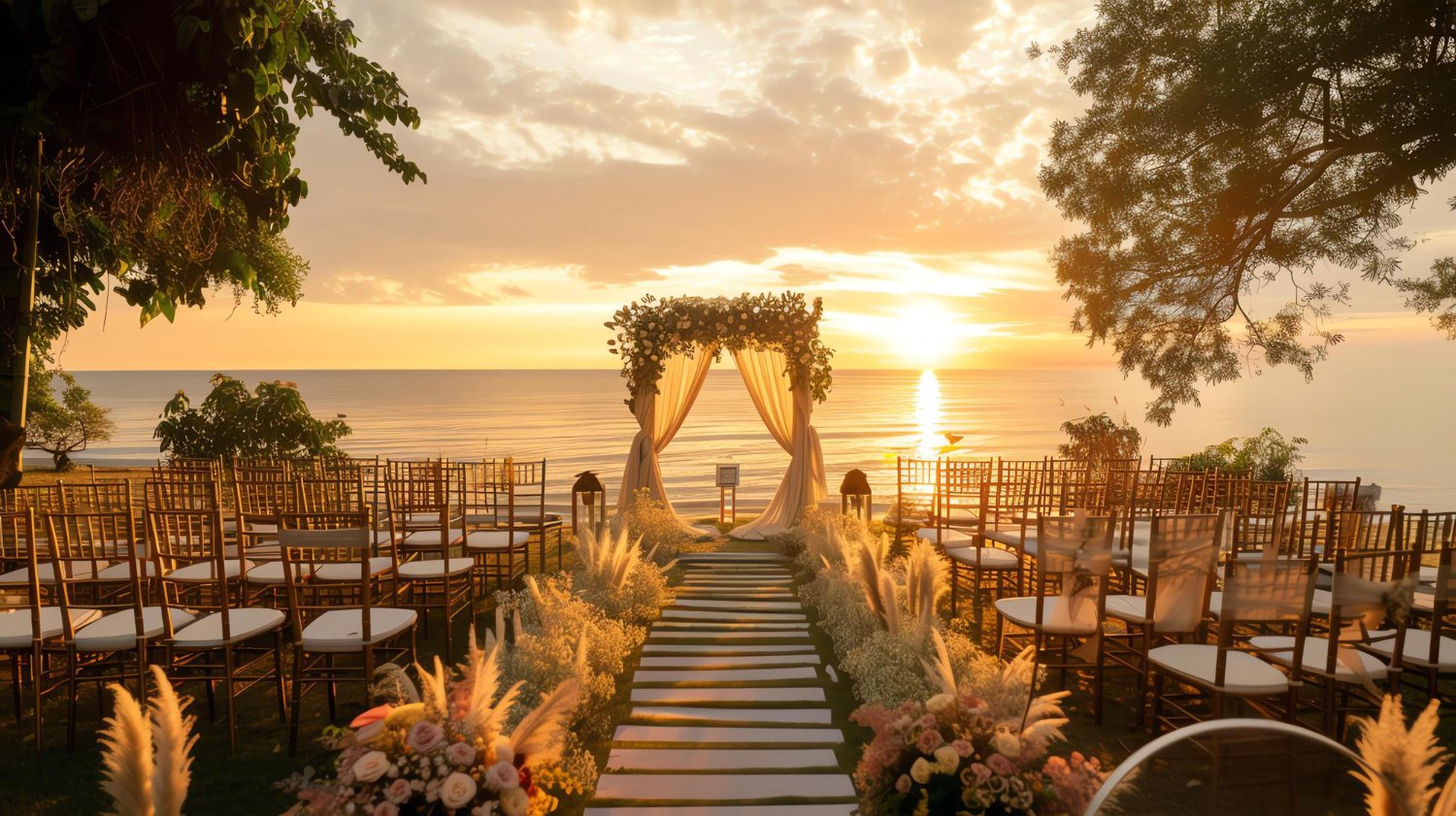
Picture an elaborate wedding inside a luxury resort. Before a single flower gets ordered or a stage goes up, someone has to know exactly where everything sits. How big should the mandap be? Will guests actually have room to move through their seating? Do the lighting

structures block anyone’s view? Where do the entertainment setups, the dining areas, the photo booths go? 

Rough estimates don’t really cut it here. AutoCAD lets designers answer these questions with actual precision instead of a best guess using detailed AutoCAD Wedding Layouts

Every measurement, every layout, every design element gets planned out digitally — so both the client and the vendors know what they’re getting long before the wedding day shows up. That’s the real value of AutoCAD for Wedding Decor Designers

Why Traditional Wedding Decor Planning Isn't Always Enough

Wedding décor has always leaned on sketches, venue visits, inspiration boards, and years of hard-won experience. Talented designers have pulled off incredible weddings this way for a long time. But as celebrations have gotten bigger and more complicated, that process has started showing its limits. 

A sketch that looks perfectly clear to the designer can leave a client picturing something entirely different. Vendors read the same layout in different ways. Even a small measurement error can throw off stage placement, guest seating, or a decorative installation. 

Then the changes start coming, because they always do. 

The guest list grows. 

The couple wants a bigger dance floor. 

The stage has to shift because the venue won’t allow it where it was. 

Without digital tools, even a small revision can mean redrawing the whole layout from scratch. And as weddings get more elaborate, that kind of manual redo slows everything down and opens the door to mistakes. 

AutoCAD’s biggest strength is accuracy, plain and simple. 

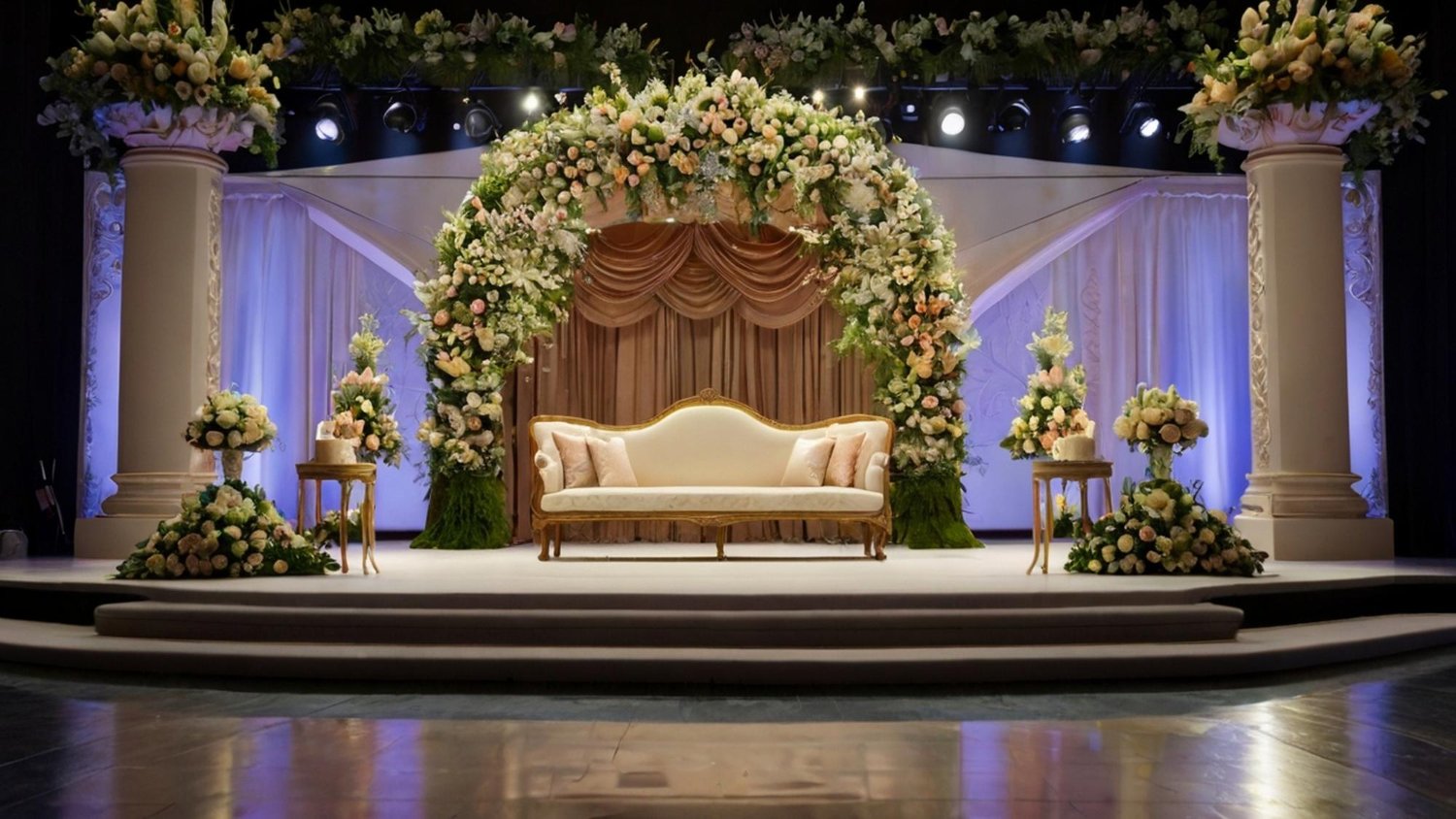
Instead of guessing whether a décor piece will actually fit, designers work off exact venue dimensions. Stages, floral structures, seating layouts, lighting rigs, lounge areas, walkways — all of it gets planned before anyone starts building. This level of Event Design Planning is one of the biggest advantages of AutoCAD for Wedding Decor Designers.
That precision isn’t just easier on the designer. It changes the experience for everyone in the room. 

Clients get a clearer picture of the space. Vendors get real layouts instead of rough sketches. Production teams know exactly what they’re building, and planners can run multiple teams at once without everyone stepping on each other. 

Revisions get simpler too. If a client changes their mind about seating, or wants to add another installation, the designer updates the layout on screen instead of tearing up the drawing and starting over. 

What that adds up to: faster approvals, smoother coordination, fewer surprises the morning of setup.

More Than a Design Tool

AutoCAD’s real value isn’t the pretty drawings. It’s what those drawings do for communication. 

Wedding décor pulls in florists, lighting technicians, production teams, furniture suppliers, venue managers, planners, and the clients themselves. Everyone needs to be looking at the same plan, not five different versions of it in their heads. 

AutoCAD gives them that shared reference point and improves Wedding Venue Design from concept to execution. 

Instead of explaining the same idea five times to five different people, designers can hand over layouts that show measurements, placements, and spacing clearly. Fewer misunderstandings, better collaboration, and a much better shot at the final setup actually matching what was approved. That’s another reason AutoCAD for Wedding Decor Designers continues to gain importance. 

It also just reads as more professional to clients — especially the ones paying for luxury weddings, where the bar for “impressive” starts pretty high already. 

A Skill That Gives Designers an Edge

The wedding industry keeps moving, and client expectations move right along with it. 

Couples today want personalised experiences, execution that doesn’t wobble, and real confidence in the decisions they’re making. They want to see the wedding before it exists, not just imagine it from a mood board. 

For a décor designer, that means creativity alone isn’t the whole job anymore. It has to pair with technical skill.

Learning AutoCAD doesn’t make anyone less creative. If anything, it lets the creative ideas get presented more clearly, planned more precisely, and pulled off with a lot less scrambling. 

As weddings keep getting bigger, more customised, and more design-driven, the designers who can do both — the aesthetics and the technical side — are the ones who’ll stand out. That’s why AutoCAD for Wedding Decor Designers has become a skill worth investing in. 

If you’re serious about a career in wedding décor, AutoCAD isn’t some nice-to-have skill anymore. It’s turning into one of the most valuable ones in the industry. Mastering AutoCAD for Wedding Decor Designers can help you stay ahead in a rapidly evolving wedding industry. 

At The Wedding School, students learn tools like AutoCAD alongside hands-on wedding décor training, mentorship from people already working in the field, and real event exposure — the kind of foundation that makes designing celebrations people actually remember a lot less of a guessing game.
The Wedding Industry Is Booming in 2026. Here’s How to Get In

Introduction

The wedding industry has always been one of the more exciting sectors to work in, but 2026 feels like a genuine shift. If you’re considering a Wedding Industry Career 2026, there’s never been a better time to explore the possibilities. Weddings today aren’t limited to grand venues and traditional ceremonies anymore — couples want experiences that reflect their personalities, cultures, and their own story, and that’s created real demand for people who can bring those visions to life. 

From intimate destination celebrations to multi-day luxury weddings, the industry keeps expanding. Families are prioritising memorable experiences over just checking boxes, social media has raised the bar on wedding aesthetics, and new trends keep reshaping how celebrations actually get planned. 

For aspiring entrepreneurs and creative professionals, this is a real opportunity to build something in one of the fastest-moving lifestyle industries around. Whether your interest is planning, design, photography, hospitality, or styling, there’s rarely been a better time to get into the wedding business and build a successful Wedding Planning Career. For anyone looking at a Wedding Industry Career 2026, the opportunities are broader than ever before.

Why the Wedding Industry Is Growing So Fast

India hosts millions of weddings every year — that alone makes it one of the largest wedding markets in the world. In 2026, the industry keeps growing on the back of changing consumer preferences and rising disposable incomes. 

Modern couples want more than a traditional ceremony. Customised décor, curated guest experiences, destination venues, entertainment, themed functions, content built specifically for social media — every one of those elements creates exciting Wedding Business Opportunities for professionals with specialised skills. 

Technology has changed the planning process too. Digital invitations, wedding websites, AI-assisted planning tools, virtual consultations, social media marketing — none of this was standard even a few years ago, and now it’s just how weddings get planned. As expectations grow, so does the need for people who understand both creativity and execution. 

The result is an industry with opportunities at every stage of the wedding journey, making a Wedding Industry Career 2026 one of the most promising choices for creative professionals.

Career Opportunities Beyond Wedding Planning

Ask most people what a career in weddings looks like, and they’ll picture a planner. Fair enough — planning is still one of the most sought-after paths. But the ecosystem goes well beyond event coordination and offers a wide range of Wedding Industry Jobs.

Some of the most in-demand wedding careers in 2026: 

Wedding Planner Wedding planners handle everything from budgeting and vendor coordination to timelines and guest management. They keep the event running smoothly while trying to make it stress-free for the couple. It remains one of the most rewarding paths for anyone pursuing a 

Wedding Decorator and Designer – Design professionals shape the look of the venue — florals, stage concepts, lighting, furniture, thematic styling. Creativity and attention to detail matter a lot here. 

Wedding Photographer and Filmmaker – Couples care more than ever about how their wedding gets told as a story, so photography and cinematography remain some of the most valuable wedding services going. People who understand candid moments, cinematic films, and content creation are seeing more demand than ever. 

Bridal Makeup Artist and Stylist – Personalised beauty services are now a core part of weddings. Makeup artists, hairstylists, and personal stylists often work across multiple events during a single wedding week. 

Venue Consultant –Choosing the right venue is one of the biggest decisions a couple makes. Venue consultants help clients shortlist locations based on budget, guest count, style, and logistics. 

Wedding Stationery and Invitation Designer –Digital and luxury printed invitations keep evolving — creative illustrations, animation, interactive websites, personalised branding for weddings.  Together, these roles make up an industry that welcomes people from creative, business, hospitality, and design backgrounds. Whether you choose to specialise or diversify, today’s Wedding Industry Jobs offer long-term growth and creative satisfaction.

Skills That Make You Stand Out

Creativity gets you noticed. It’s not what keeps you employed. Success in the wedding industry is a mix of technical knowledge, people management, and problem-solving.
Some of the most valuable skills:

● Strong communication and interpersonal skills
● Event planning and time management
● Budget planning and financial understanding
● Creative design and visual storytelling
● Vendor negotiation and coordination
● Client relationship management
● Crisis management and quick decision-making

Wedding professionals often work under tight deadlines while managing multiple stakeholders at once. Staying calm under pressure can matter just as much as artistic talent. Developing these abilities will strengthen your Wedding Planning Career and prepare you for a successful future in the industry.

How to Start Your Career in the Wedding Industry

Breaking into a Wedding Planning Career is easier now thanks to structured education and professional training.

Learn the Fundamentals

A professional certification or specialised wedding management course gives you a solid grounding in event planning, logistics, hospitality, budgeting, décor, production, and client servicing. Formal education also helps you understand industry standards and best practices.

Gain Practical Experience

Classroom learning should always be backed up by hands-on experience. Internships with wedding planners, event companies, luxury hotels, or décor firms give you real exposure to real events — the kind you can’t really get from a textbook.

Working behind the scenes is where it actually clicks: timelines, vendor coordination, client expectations, how events come together when fifty things are happening at once.

Build Your Professional Network

The wedding industry runs on relationships more than almost anything else. Attending industry events, exhibitions, workshops, and networking sessions lets aspiring professionals connect with planners, photographers, designers, venues, and suppliers.

These connections often lead to internships, collaborations, referrals, and long-term business opportunities. Combined with practical learning, they can help you build a successful Wedding Industry Career 2026.

FAQ:

1. Is the wedding industry growing in 2026?
Yes, and it’s not slowing down either. Couples are putting more money into personalised experiences, destination weddings, and premium celebrations than they used to.

2. How can I start a career in the wedding industry?
A professional wedding management course is a solid starting point. From there, internships give you the real-world experience, and building a network within the industry is what actually keeps the opportunities coming.

3. What are the highest paying wedding industry jobs?
Wedding planner, decorator, photographer, filmmaker, luxury venue consultant, bridal stylist, these tend to be where the money is, especially once you’ve built a name for yourself.

4. Do I need a certification to become a wedding planner?
Not strictly, no. But it helps you pick up industry knowledge faster, get practical skills sooner, and it tends to open more doors early on.

5. How much investment is needed to start a wedding business?
Depends entirely on what kind of business you’re starting. A lot of professionals begin small and grow gradually, building their portfolio and client base as they go rather than spending big upfront.

6. Which wedding services are in the highest demand?
Planning, décor, photography, videography, bridal makeup, destination wedding management, and content creation are all seeing strong demand right now.

7 Wedding Trends Taking Over Luxury Celebrations in 2026

Luxury Weddings Are Being Redefined in 2026

Luxury weddings have always run on elegance, exclusivity, unforgettable moments. That hasn’t changed in 2026. What’s changed is what “unforgettable” actually means to couples now — it’s less about the grandest venue in the city, more about whether the wedding actually feels like them. Their personalities, their values, their story. These evolving expectations are shaping the biggest Luxury Wedding Trends 2026

Curated guest experiences, immersive entertainment, sustainable choices, technology that works quietly in the background instead of getting in the way — that’s the new checklist. Every detail, from the invitation to the farewell brunch, gets planned on purpose now, not left to tradition. 

Whether you’re planning your own wedding or building a career in the industry, it helps to know where things are actually headed rather than where they used to be. 

Here are seven Luxury Wedding Trends 2026 worth paying attention to. 1.

Immersive Guest Experiences Are the New Standard

The couple used to be the whole point. Now the guests are too. 

Instead of “ceremony, then reception,” couples are building entire weekends guests can move through. Welcome hampers with locally sourced gifts. Personalised itineraries. Wellness sessions before brunch. Live food stations instead of a buffet line. Cultural experiences built around where the wedding is actually happening. 

Guests no longer want to simply watch. They want to be involved, making these Modern Wedding Experiences more memorable than ever. 

Which means planners can’t just think logistics anymore — who’s sitting where, what time the car leaves. They have to think about how it feels to walk into that venue for the first time.

1.Immersive Guest Experiences Are the New Standard The couple used to be the whole point. Now the guests are too. 

Instead of “ceremony, then reception,” couples are building entire weekends guests can move through. Welcome hampers with locally sourced gifts. Personalised itineraries. Wellness sessions before brunch. Live food stations instead of a buffet line. Cultural experiences built around where the wedding is actually happening. 

Guests no longer want to simply watch. They want to be involved, making these Modern Wedding Experiences more memorable than ever. 

Which means planners can’t just think logistics anymore — who’s sitting where, what time the car leaves. They have to think about how it feels to walk into that venue for the first time.

2. Sustainability Meets Luxury 

For a long time, “sustainable” and “luxury” sounded like opposites. That’s no longer the case. In fact, it’s become one of the defining Luxury Wedding Trends 2026.

Locally sourced flowers instead of flown-in ones. Décor that gets reused instead of binned the next morning. Menus built around what’s actually in season. Digital invitations. Gifting that doesn’t end up forgotten in a drawer. Venues that take environmental responsibility seriously instead of just claiming to. 

None of this is couples settling for less — if anything, these choices tend to feel more intentional, more personal, less like money was just thrown at the problem. 

Increasingly, luxury is measured less by how much was spent and more by how thoughtfully it was put together. Wedding professionals who understand sustainable planning are only going to get asked for it more.

3.Personalisation Is Taking Centre Stage 

No two weddings look the same anymore, and honestly, that’s exactly the point. 

Couples don’t want a template with their names swapped in. They want branding that’s theirs, colour palettes that actually mean something, signature cocktails, personalised stationery, celebrations built around family traditions, travel memories, and shared interests. These Premium Wedding Ideas help create celebrations that feel truly one of a kind. 

This is harder work than it looks. Planners and designers aren’t just executing a checklist anymore — they’re translating someone’s actual life into an event, creativity and logistics and constant back-and-forth all at once. 

That’s why storytelling has quietly become one of the most valuable skills in wedding planning.

4. AI Is Transforming Wedding Planning 

Technology used to sit on the edges of wedding planning. Today, it’s shaping some of the biggest Luxury Wedding Trends 2026

Guest lists, seating plans, budgets, vendor comparisons, timelines — AI tools are chewing through the parts of planning that used to eat entire afternoons. Virtual venue walkthroughs mean couples can rule out a location before ever getting on a flight. Digital mood boards, automated RSVP tracking, recommendations that actually adjust to what the couple wants. 

None of it replaces the human part. It just clears the boring parts out of the way faster. 

The planners doing well with this aren’t the ones who’ve handed judgment over to a tool — they’re combining it with an actual read on the couple and a personal touch software still can’t fake.

5.Floral Installations Are Becoming Statement Pieces

Flowers were never going anywhere. But how they’re being used has changed a lot. 

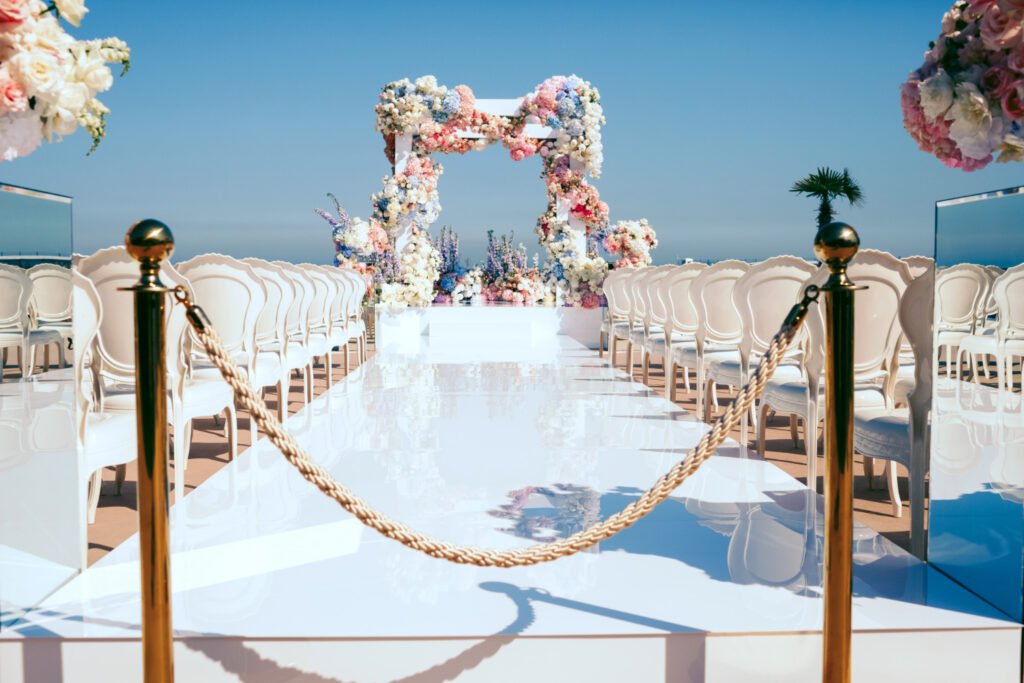
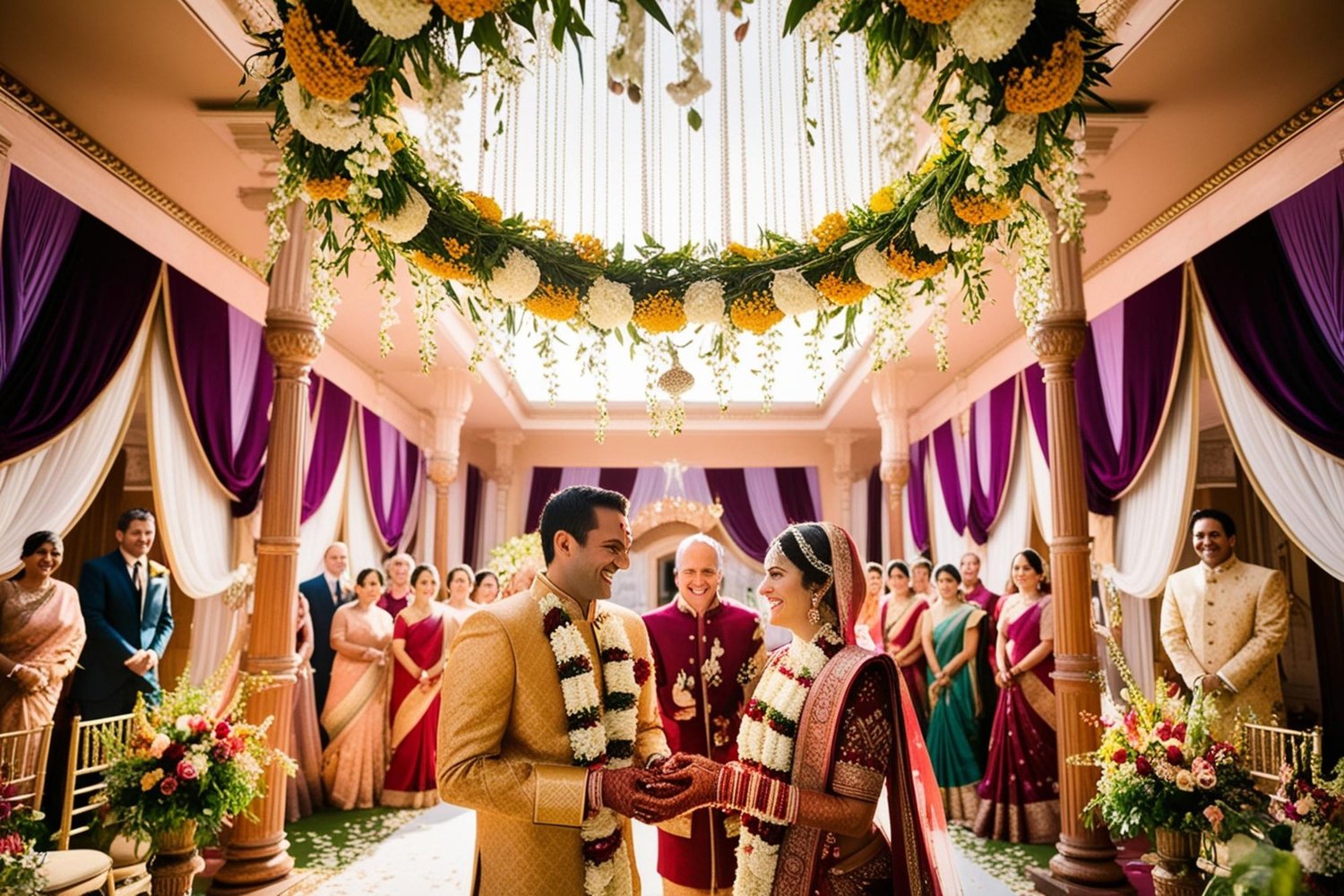
Floral ceilings. Installations that hang from nowhere in particular. Botanical tunnels you walk through to reach the mandap or the aisle. Centrepieces built more like sculpture than table decoration. Entrances that are basically their own moment. 

Designers have stopped treating flowers as table décor and started using them to transform entire spaces, redefining High-End Wedding Decor while becoming one of the standout Luxury Wedding Trends 2026

Unusual colour palettes, dried botanicals, textured foliage that photographs differently depending on the light — couples are genuinely experimenting here. Which tracks, because these installations usually end up being the most photographed thing at the whole wedding. Not a small line item on the budget anymore.

6.Multi-Day Destination Weddings Continue to Rise 

A single-day wedding is starting to feel almost old-fashioned at the luxury end of the market. Multi-day celebrations have become one of the defining Luxury Wedding Trends 2026, reflecting the latest Destination Wedding Trends across India and beyond. 

Three to five days is becoming normal — welcome dinners, a cultural evening, an adventure activity if guests are staying longer, a pool party, cocktail nights, the ceremony itself, the reception, a farewell brunch to close it all out. Rajasthan and Udaipur remain go-to choices. So do Goa, Kerala, Tuscany, Bali, Thailand — places that give a couple something a hometown venue just can’t. 

None of this happens without serious coordination between venues, vendors, travel partners, and hospitality teams — which is exactly where planners get the chance to manage bigger budgets and build bigger reputations.

7.Interactive Entertainment Creates Lasting Memories DJs and live bands are no longer the only entertainment option. 

Immersive performances. Live artists working in real time. Food that’s part show, part meal. Projection mapping across an entire venue wall. Digital photo installations. Drone light shows. Silent discos. Content creators built into the wedding team from day one instead of hired as an afterthought. 

The goal is simple: create moments guests will remember long after the celebration ends. Experiences like these continue to shape Luxury Wedding Trends 2026.

Planning the Budget for a Luxury Wedding

Luxury weddings may be growing in scale, but budgeting matters just as much as it ever did — maybe more. 

Most couples aren’t spreading money evenly across everything anymore. They’re putting it where it’ll actually be felt: venues, hospitality, décor, entertainment, photography, guest experience, while trimming what adds little value. 

Experienced planners earn their fee right here — knowing where to spend, where to hold back, and how to keep quality consistent without the budget quietly spiraling. Those who combine financial planning with creative direction continue to be the ones clients fight to book. 

The Future of Luxury Weddings

Grandeur alone no longer defines a luxury wedding. Thoughtful experiences, personal storytelling, sustainability, smart technology, and meaningful guest engagement have become the new standard for Luxury Wedding Trends 2026

Client expectations keep shifting, and there’s no version of “keeping up” that runs on creativity alone anymore. It takes innovation, organisation, and execution that doesn’t fall apart under pressure, all working together. 

For anyone building a career in this industry, that’s not a challenge; it’s an opportunity. 

If creating celebrations like this is what you want to do, The Wedding School offers industry-focused training, real hands-on exposure, and mentorship from professionals shaping the future of luxury weddings. Staying ahead of Luxury Wedding Trends 2026 starts with learning from the people leading the industry. 

FAQ:

1. What are the top luxury wedding trends in 2026? Immersive guest experiences, personalised themes, sustainable celebrations, AI-powered planning, statement floral installations, multi-day destination weddings, interactive entertainment, that’s where luxury weddings are headed in 2026.

2. Are destination weddings still popular in 2026? Very much so. If anything, they’re one of the biggest draws right now, with couples picking locations for the whole experience, scenic venues, multi-day schedules, something guests will actually remember.

3. How is AI being used in wedding planning? Mostly behind the scenes. AI tools now help with guest lists, seating arrangements, budgets, vendor recommendations, timelines, and even virtual venue walkthroughs, taking a lot of the manual grind out of planning.

4. What are sustainable luxury weddings? Weddings that don’t treat “eco-conscious” and “premium” as opposites. Think locally sourced flowers, décor that gets reused instead of thrown out, seasonal menus, digital invites, and venues that actually take environmental responsibility seriously.

5. Which wedding decor trends are most popular? Grand floral installations are a big one right now, along with personalised design themes, immersive lighting, unexpected colour palettes, and entrances designed to be a moment in themselves.

6. How much does a luxury wedding cost in 2026? It varies a lot, destination, guest count, venue, décor, and entertainment all play a part. Budgets can start around several lakhs and climb into multiple crores depending on the scale and how customised everything is.