
Taj Ganga Kutir Resort & Spa, Raichak: A New Destination Wedding Venue Near Kolkata

Introduction

The search for a memorable destination wedding venue near Kolkata is no longer limited to city hotels or distant palaces. Couples are increasingly looking for properties that feel like a getaway while remaining accessible to their families and guests. A riverside location, comfortable accommodation, flexible event spaces and reliable hospitality can transform a wedding from a series of functions into a complete destination experience.

Taj Ganga Kutir Resort & Spa, Raichak, brings these qualities together on the banks of the Ganges in West Bengal. Opened under the Taj brand in September 2025, the resort is positioned as a riverine retreat that celebrates Bengal’s countryside, architecture and hospitality. Set within a 100-acre estate, it offers 155 rooms and suites and more than 70,000 sq. ft. of banqueting and event space.

For couples, the property presents an escape from the pace of Kolkata. For wedding planners, it offers something equally valuable: the ability to accommodate guests and create multiple celebrations within one destination.

A Riverside Setting Within Reach of Kolkata

Raichak is approximately a two-and-a-half-hour scenic drive from Kolkata, according to IHCL. This distance allows the celebration to feel like a destination wedding without necessarily requiring flights for guests travelling from the city.

The Ganges shapes the atmosphere of the property. River-facing rooms, lawns and event areas allow planners to work with changing natural light, open skies and waterfront views. Morning ceremonies can benefit from softer light, while evening functions can use the river and sunset as part of the visual narrative.

However, accessibility must still be planned carefully. Guest arrivals should be staggered, transportation should include adequate buffers, and elderly guests may require more comfortable vehicles or planned rest stops. Wedding planners should also verify road conditions, journey times and alternative transfer arrangements close to the event date.

Accommodation for a Multi-Day Wedding

Taj Ganga Kutir Resort & Spa has 155 rooms and suites. The accommodation includes river-facing rooms, suites with separate living areas and duplex options, including lagoon- and Jacuzzi-oriented categories. This range can help planners create a thoughtful room allocation strategy for couples, immediate family members, elderly guests and larger groups.

Accommodation within the wedding property reduces repeated transfers between hotels and venues. It also makes it easier to coordinate welcome amenities, hospitality desks, room drops, function reminders and emergency support.

A rooming plan must account for room categories, accessibility requirements, family groupings, arrival times and bridal preparation rooms rather than focusing only on the total inventory.

For guests staying between functions, the resort offers leisure facilities such as swimming pools, including an infinity-edge pool, J Wellness Circle spa, a fitness centre, indoor games and outdoor activities. These facilities can help turn gaps in the wedding itinerary into relaxed guest experiences.

Event Spaces for Different Wedding Functions

The property’s major advantage is the variety of indoor and outdoor event spaces. This gives wedding planners the flexibility to give every function a different identity without moving guests to another hotel.

The Royal Pavilion and North Lawns offer a combined grand setting for weddings and large gatherings. The Royal Pavilion measures approximately 700 sq. m and can accommodate up to 600 guests in a reception-style layout.

The Citadel and Citadel Lawn provide a more intimate option, with the indoor space measuring approximately 336 sq. m. The venue can accommodate up to 280 guests depending on the seating arrangement, making it suitable for a mehendi, welcome dinner, family gathering or smaller wedding ceremony.

The South Lawn is the property’s largest outdoor celebration space. Overlooking the Ganges and measuring approximately 4,460 sq. m, it is listed for receptions of up to 3,000 guests. Its scale creates possibilities for a large sangeet, wedding ceremony or reception, subject to production requirements and hotel permissions.

Smaller spaces such as Frangipani and Hooghly can support family briefings, artist coordination or intimate gatherings. Destination weddings require operational spaces in addition to guest-facing venues.

Capacities vary according to seating style, décor, stage size, buffet layout and technical production. Planners should therefore treat published capacities as a starting point and obtain an approved event layout before confirming the guest count.

Image caption: Representational visual showing guest hospitality and multi-function wedding possibilities at a riverside resort. This is not an actual photograph of the property.

Creating a Function-Wise Wedding Experience

A destination wedding at Taj Ganga Kutir can be designed as a journey rather than a collection of unrelated functions. The river and Bengal-inspired aesthetics provide a common sense of place while allowing each celebration to have its own mood.

A welcome evening could introduce guests to Bengal through local music and regional food. A daytime mehendi may use handcrafted details and lighter décor, while the sangeet can shift into a theatrical environment with controlled lighting and a planned performance stage. The wedding ceremony can return to the landscape with a mandap that frames rather than obstructs the river view.

The strongest décor concepts would respond to the property instead of covering it. Terracotta, handwoven textiles, cane, foliage and Bengal-inspired craft can create a locally rooted design language. Décor teams must still account for wind, moisture, ground conditions and weather protection.

Food, Wellness and Guest Engagement

Taj Ganga Kutir’s signature restaurants include Machan and House of Ming, while the River View Lounge and Verandah Lounge offer relaxed settings. Wedding menus should be developed with the culinary team according to the couple’s preferences, guest profile and function format.

IHCL highlights private boat rides, riverside yoga, cultural performances, village trails and sunset dining among the experiences associated with the resort. Subject to availability, planners can consider them for smaller groups or extended itineraries.

These additions should remain optional and well paced. A destination wedding itinerary becomes tiring when every hour is programmed. The best guest experience balances celebrations with adequate time to rest, explore the property and enjoy the location.

Practical Considerations for Wedding Planners

Before recommending the venue, planners should conduct a detailed site visit covering guest movement, vehicle access, room blocks, backstage areas, vendor routes, sound restrictions and weather alternatives.

Outdoor events require a clearly documented backup venue or weather plan. The team should also confirm electrical loads, generator support, rigging permissions, fire and safety requirements, music deadlines and restrictions on décor installation.

Planners must understand which areas remain accessible to other hotel guests. Exclusivity and common-area usage should be discussed in writing, while minimum guarantees, taxes, cancellation clauses, room attrition and vendor policies must be reviewed before signing.

A Promising Wedding Destination in West Bengal

Taj Ganga Kutir Resort & Spa offers a compelling combination of scale, accommodation, flexible event venues and a distinctive riverside setting. Its proximity to Kolkata makes it particularly relevant for families seeking a destination experience without travelling to a faraway state or country.

The property can support celebrations ranging from intimate family gatherings to large receptions. Yet its successful use depends on more than its visual appeal. A wedding planner must evaluate logistics, guest comfort, weather, venue capacities, production feasibility and commercial terms before shaping the final experience.

Learning how to assess a venue is an essential part of professional wedding planning. Through expert-led sessions, practical assignments and industry exposure, The Wedding School helps students understand how hotels and resorts are evaluated, contracted and transformed into well-managed wedding destinations. For aspiring planners and décor professionals, such knowledge creates the confidence to recommend the right property and turn its potential into an unforgettable celebration.

Sources for Fact-Checking

  • Indian Hotels Company Limited: Taj Ganga Kutir Resort & Spa opening announcement
  • Taj Hotels: Taj Ganga Kutir Resort & Spa event spaces
  • Taj Hotels: Accommodation, amenities and property experiences

Beyond Creativity: Understanding the Business of Weddings

Beyond Creativity: Understanding the Business of Weddings

When people think about the wedding industry, they often picture breathtaking décor, spectacular venues, elegant celebrations and unforgettable guest experiences. While creativity is undoubtedly an important part of wedding planning, it represents only one side of the profession. Behind every beautifully executed wedding is a business that depends on planning, pricing, teamwork, communication and responsible financial management.

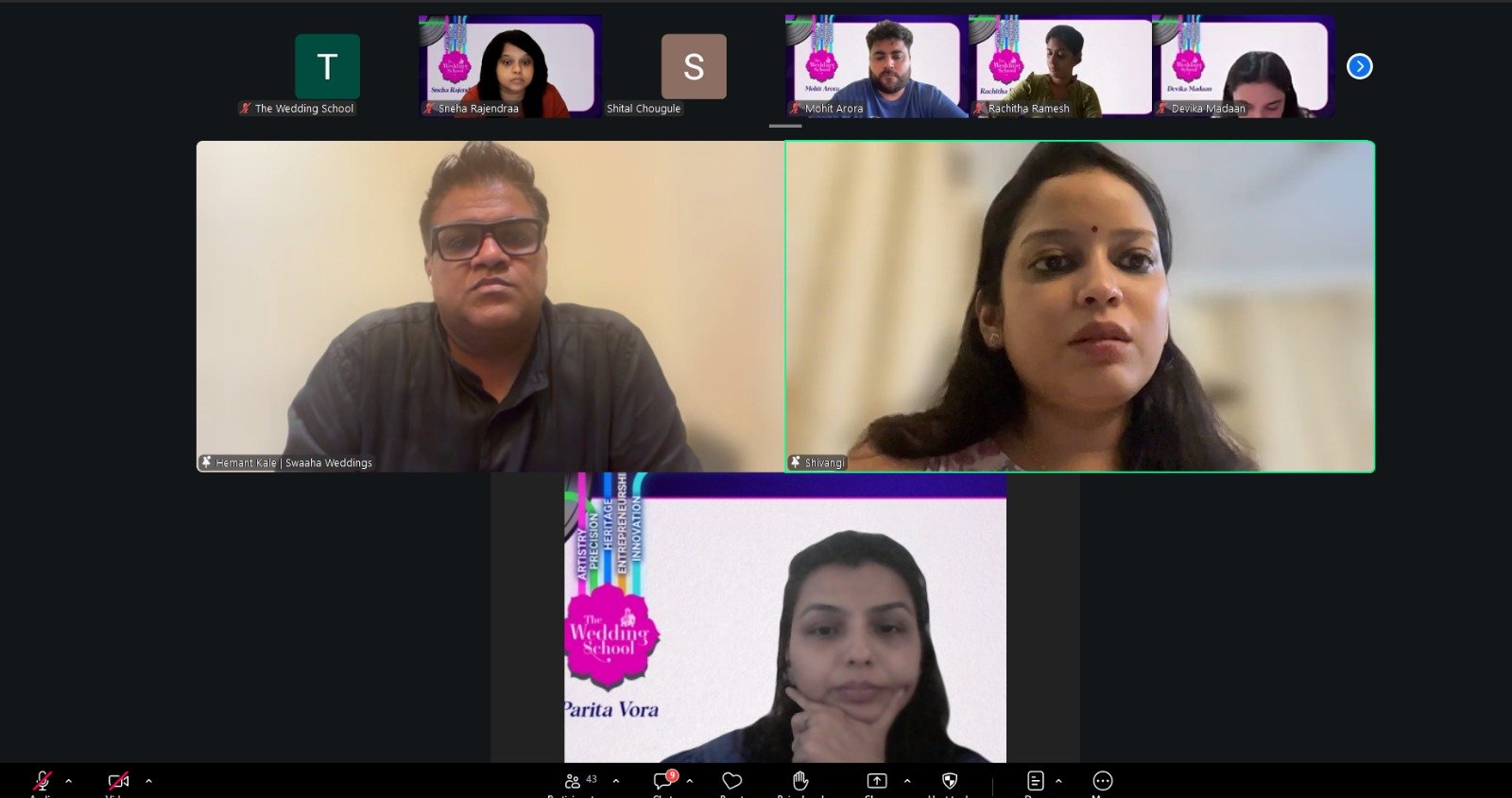
This important distinction formed the foundation of the Business of Weddings session conducted by Hemant Kale at The Wedding School. The session encouraged students to look beyond the visible glamour of weddings and understand what it truly takes to build and manage a sustainable wedding planning business.

A successful wedding professional must know how to turn creative ideas into well-planned services, build dependable industry relationships and deliver consistent value to clients. Creativity may attract attention, but business knowledge is what enables a wedding company to survive, grow and remain profitable.

Understanding Your Purpose in the Wedding Industry

The session began with a simple but powerful question: Why do you want to enter the wedding business?

There is no single correct answer. Some individuals are attracted to the industry because they enjoy creativity and celebration. Others want to become entrepreneurs, travel to different destinations, work with diverse people or build a financially rewarding career.

Understanding this purpose is essential because it influences almost every future business decision. It affects the type of clients a planner wishes to serve, the scale of weddings they want to manage and the services they eventually offer.

Someone passionate about intimate celebrations may build a boutique wedding planning company. Another professional may choose to specialise in destination weddings, luxury décor, wedding hospitality or entertainment management. A person interested in systems and logistics may excel in production, vendor coordination or large-scale event management.

Purpose brings clarity. It helps aspiring professionals move beyond the broad idea of “working in weddings” and begin identifying the exact space they want to create for themselves.

Wedding Planning Is a People-First Business

Weddings are emotionally significant occasions involving not only the couple but also their families, friends and communities. This makes wedding planning deeply personal and relationship-driven.

A professional planner must learn how to listen carefully, ask relevant questions and understand expectations that may not be clearly stated in the initial brief. Clients may describe the colours, venue or number of guests they want, but meaningful conversations reveal deeper priorities.

They may want the wedding to reflect their cultural background, honour a family tradition, accommodate elderly guests or recreate an important memory. These emotional details can completely change the planning and design direction.

This is why emotional intelligence is a vital wedding-planning skill. A planner must know when to guide, when to listen and when to manage disagreements calmly. Clients should feel understood and reassured throughout the planning journey.

Creativity creates exciting ideas, but trust encourages clients to approve those ideas. Strong relationships also lead to recommendations, repeat business and long-term credibility within the wedding industry.

Turning Passion into a Profitable Wedding Business

Passion can motivate a person to begin a career, but passion alone cannot sustain a business. Every wedding planning business must generate enough revenue to cover its costs, support its team, maintain service quality and earn a reasonable profit.

Aspiring planners must understand the difference between revenue and profitability. A large project may appear financially impressive, but it may not be profitable if the company fails to account for team salaries, travel, office expenses, vendor payments, taxes and last-minute requirements.

Pricing should therefore be based on the actual scope of work. A planner must evaluate the size of the wedding, number of functions, guest count, destination, planning duration, team requirement and level of responsibility before sharing a professional fee.

Charging without understanding these elements can result in overpromising, poor service delivery and financial loss. A sustainable business requires commercial awareness, transparent pricing and disciplined expense management.

Client Acquisition and Brand Positioning

Even the most talented wedding planner needs a consistent method of finding suitable clients. Client acquisition may happen through digital marketing, social media, industry networking, referrals, hotel relationships, vendor recommendations and previous client testimonials.

However, visibility alone is not enough. A business also needs clear positioning.

Brand positioning communicates what the company does, who it serves and why its approach is different. A wedding company may position itself around luxury destination weddings, culturally rooted celebrations, sustainable décor, intimate events or highly personalised guest experiences.

Clear positioning helps clients understand whether the planner is right for them. It also allows the business to build specialised knowledge and communicate more confidently.

A planner should not attempt to accept every type of project without considering whether it matches the company’s capabilities, values and resources. The right clients contribute not only to revenue but also to a stronger portfolio and reputation.

Budgeting, Pricing and Profit Margins

Budget management is one of the most important responsibilities in a wedding planning business. Clients expect planners to help them allocate money intelligently across venues, décor, hospitality, entertainment, food, invitations, gifting, logistics and technical production.

At the same time, planners must protect their own business margins.

A professional quotation should clearly define the services included, payment schedule, taxes, reimbursable expenses and conditions for additional work. Any change in guest count, venue, function requirements or creative scope should be documented and costed appropriately.

Planners must also monitor the cash flow of every project. Vendor advances may be due before a client’s next instalment, making payment planning extremely important. A project can be profitable on paper and still create financial pressure when receipts and payments are poorly scheduled.

Sound financial management gives the business stability and prevents creative decisions from becoming commercial risks.

Vendor Relationships and Negotiation

No wedding planning company works independently. Every celebration requires a network of venues, decorators, caterers, photographers, entertainers, choreographers, technical teams, transport partners and numerous other specialists.

A wedding planner must therefore develop strong vendor-management skills. Selecting a vendor should not be based only on the lowest quotation. Reliability, quality, communication, capacity, experience and problem-solving ability are equally important.

Negotiation should also be approached professionally. The objective is not to reduce every vendor’s price unrealistically but to arrive at fair commercial terms that protect the client’s budget without compromising delivery.

Strong vendor relationships can become one of a wedding company’s greatest assets. Trusted partners are more likely to support urgent requests, maintain quality standards and work collaboratively when unexpected challenges occur.

Team Management and Delegation

As a wedding business grows, the founder cannot personally manage every task. Building a dependable team and learning to delegate become essential.

Each member should understand their responsibilities, reporting structure, timelines and decision-making authority. Detailed briefs, checklists and regular reviews help prevent important information from remaining with only one person.

Delegation does not mean giving away responsibility. It means assigning work clearly while maintaining accountability. A capable leader sets expectations, gives the team the information and resources required, and checks progress at the appropriate stages.

Professional team management creates consistent service and allows a wedding planning business to manage multiple projects without depending entirely on its founder.

Systems, Documentation and Service Consistency

Clients experience a wedding through emotions, but the planning team executes it through systems. These systems may include enquiry forms, client questionnaires, proposals, contracts, budgets, vendor trackers, payment schedules, guest lists, rooming lists, production timelines and event-day checklists.

Documentation protects both the planner and the client. Written approvals reduce confusion, while defined processes ensure that important tasks are completed on time.

Systems also make it easier to train new team members and maintain consistency. When every project follows a dependable process, the company becomes more organised and scalable.

The goal is not to remove creativity. It is to create a strong operational structure that allows creativity to be executed confidently.

Destination Weddings and Expanding Opportunities

Destination wedding planning can open doors to a much wider professional network. Planners may collaborate with hotels, tourism boards, transport companies, local vendors and hospitality teams across different cities and countries.

However, destination weddings also bring greater responsibility. Travel logistics, accommodation, permissions, local regulations, vendor availability, weather conditions and cultural expectations must all be considered.

For professionals with the right preparation, this area offers opportunities for travel, networking and business growth. It also teaches planners how to adapt their services to unfamiliar locations while maintaining consistent standards.

Building an Industry-Ready Mindset

The central learning from Hemant Kale’s session was that wedding professionals must balance imagination with commercial intelligence.

A planner should be able to understand a client’s emotions while protecting the project scope, create exciting concepts while respecting the budget, and maintain vendor relationships while negotiating responsible terms.

The strongest professionals are not only creative thinkers. They are communicators, financial planners, negotiators, team leaders and problem-solvers. They understand that every beautiful wedding must also be operationally manageable and commercially viable.

Conclusion

The wedding industry offers tremendous opportunities for creative and ambitious professionals, but lasting success requires more than passion. It demands purpose, people skills, financial understanding, strong documentation, dependable partnerships and disciplined execution.

Learning the business of of weddings allows aspiring planners to move from simply contributing to events to building careers and companies that can grow sustainably.

Through expert-led sessions such as Business of Weddings, students at The Wedding School gain insights into both the creative and commercial realities of the profession. Its live online and hybrid courses in Wedding Planning and Wedding Décor Design help students develop practical knowledge, industry confidence and a business-ready mindset. For anyone aspiring to build a meaningful career in wedding planning or event management, The Wedding School provides a strong platform from which to begin.


From Ambition to Industry: The Emerging Faces of Wedding Planning

From Ambition to Industry: The Emerging Faces of Wedding Planning

The modern wedding industry is no longer attracting only those who come from hospitality, décor or event-management backgrounds. Today, engineers, chartered accountants, marketers, business graduates, entrepreneurs, designers and professionals working internationally are all exploring a career in wedding planning

What brings such different people into one industry? For some, it is a long-standing passion for weddings. For others, it is the desire to leave a conventional profession and enter a more creative, people-focused field. Many experienced professionals also recognise the opportunity to apply their existing business knowledge to India’s growing wedding ecosystem. 

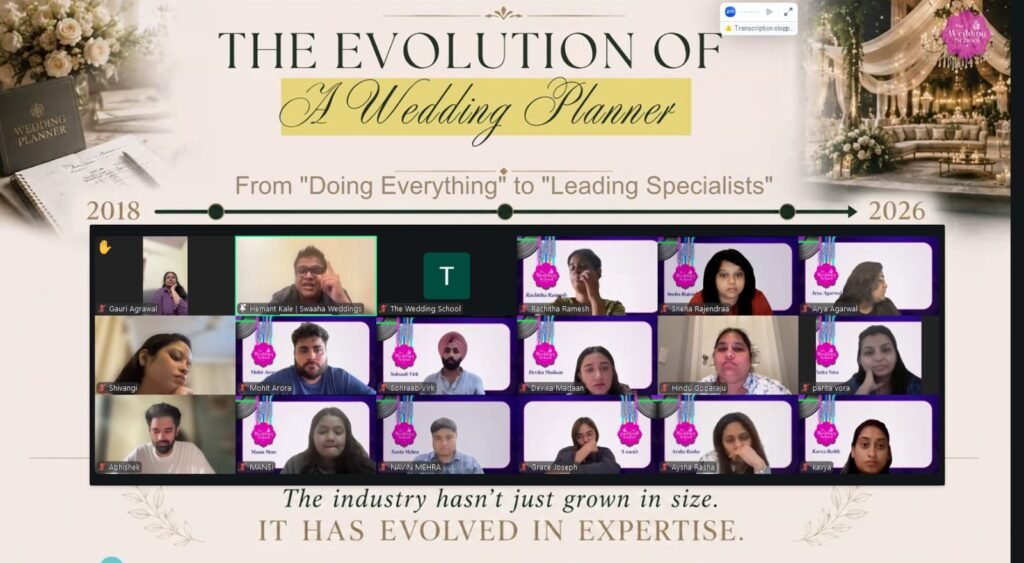
At The Wedding School, every batch reflects this diversity. Some students arrive with established businesses, some have already executed events, and others are taking their first step towards a new career. Their starting points may be different, but their ambition is similar: to turn their individual strengths into meaningful and sustainable careers in the wedding industry.

Wedding Planning Is No Longer a One-Background Profession

There was a time when wedding planning was viewed largely as an extension of event management. The profession is now far more specialised. Modern weddings require expertise in hospitality, décor, logistics, budgeting, entertainment, guest management, technology, digital communication and destination coordination. 

This expansion has created opportunities for people from numerous professional backgrounds. 

An engineer may bring process-driven thinking and technical understanding. A chartered accountant can contribute financial discipline and budgeting expertise. A marketing professional may already understand branding, communication and client acquisition. A designer can bring visual storytelling, while an entrepreneur may have experience in sales, operations and team management. 

The question is therefore not, “Do I have the perfect background for wedding planning?” A more useful question is, “How can my current skills contribute to the wedding industry?” 

From Engineering to Wedding Planning

Engineers looking for a career change may initially believe that their education has little connection with weddings. In reality, engineering develops several abilities that are valuable in professional event management. 

Engineers are trained to approach complex problems methodically. They understand sequencing, resource allocation, timelines, dependencies and risk. These skills are highly relevant when managing wedding production, technical layouts, guest logistics, transportation and event schedules. 

A wedding involves several teams working within a fixed timeline. Lighting, sound, décor, catering, entertainment and hospitality must all come together at the right moment. An engineer’s ability to understand processes and identify potential failures can become an important professional advantage. 

Creativity can be developed through exposure and experience. Structured thinking, however, gives creative ideas the discipline required for successful execution. 

Opportunities for CAs and Finance Professionals 

A wedding may be emotionally driven, but it must also be financially controlled. This is where chartered accountants, commerce graduates and finance professionals can bring significant value. 

Budgeting is one of the most important parts of wedding planning. Planners must understand how to allocate funds, evaluate quotations, schedule payments and manage changes without allowing expenses to become uncontrolled. 

A CA exploring a career in wedding planning may be particularly suited to wedding budgeting, commercial negotiation, contracts, business operations and entrepreneurship. Their ability to work with numbers can help protect both the client’s budget and the company’s profitability. 

Finance professionals also understand that high revenue does not automatically mean high profit. This commercial clarity is essential for anyone planning to launch or scale a wedding planning business. 

Marketers, Communicators and Brand Professionals 

Marketing professionals enter the wedding industry with another valuable advantage: they understand how people think, choose and connect with brands. 

Wedding planning requires clear client communication from the first enquiry to the final event. Planners must present ideas confidently, explain costs, create proposals and build trust with couples and families.

Marketing experience can also support brand positioning, social media, lead generation and business development. A professional who understands consumer behaviour may be better equipped to identify a niche and communicate its value. 

Whether the business specialises in luxury weddings, intimate celebrations, sustainable events or destination weddings, strong branding helps it attract the right audience. 

Entrepreneurs Looking to Scale 

Many students do not join a wedding planner course in India to begin from zero. They join because they have already started a business and now want to build it more professionally. 

Entrepreneurs may have experience managing clients, vendors and small events, but structured learning helps them recognise gaps in their systems. They learn how to document processes, price services correctly, manage larger teams and prepare for weddings of greater scale. 

For an entrepreneur, wedding education is not simply about learning how an event works. It is about understanding how to convert individual effort into a dependable company. 

Shivangi: Strengthening an Existing Wedding Business

Shivangi’s journey reflects this emerging category of wedding entrepreneurs. With experience in marketing, a master’s degree in international business from Germany and exposure to the startup ecosystem, she brings both professional education and commercial awareness to the industry. 

Her interest in weddings eventually inspired her to launch Brides and Beyond. She began by planning bachelorettes, birthdays and anniversaries, gradually building a client base and adding weddings to her upcoming calendar. 

Her reason for joining The Wedding School is not merely to understand the basics. She wants to strengthen her capabilities, build an industry network and scale her business with greater confidence. 

Her journey demonstrates how a professional background does not need to be abandoned when entering wedding planning. It can become the foundation on which a stronger wedding business is built. 

Recognising Opportunities in Regional Wedding Markets 

India’s wedding industry is not limited to Mumbai, Delhi or a few established destination markets. Cities such as Hyderabad, Jaipur, Ahmedabad, Indore, Bengaluru, Kolkata and Pune have active vendor communities and distinct wedding cultures.

Abhishek, based in Hyderabad, represents students who recognise the opportunity within regional markets. His existing relationships with vendors and event professionals provide him with a useful starting point. 

However, contacts alone do not create a successful business. A planner must know how to evaluate vendors, negotiate commercially responsible terms, prepare proposals, manage clients and maintain service consistency. 

With structured education, Abhishek can learn how to convert local knowledge and professional relationships into an organised and profitable wedding business. 

Turning a Personal Interest into a Professional Career 

Not every student enters the industry with a company or previous event experience. Some begin with curiosity and a strong fascination for how weddings are created. 

Arya has always been interested in weddings and wants to understand how the industry operates. Her perspective reflects that of many young professionals who see weddings as both a creative field and a serious career opportunity. 

Students such as Arya and Jaina show that passion can be a meaningful starting point. However, passion must be supported by practical skills. Aspiring planners need to understand budgeting, vendor management, hospitality, logistics, décor, client servicing and event-day execution. 

A passion for celebrations may encourage someone to enter the industry. Professional preparation enables them to remain and grow within it. 

Building Wedding Businesses Across Borders 

The interest in Indian weddings also extends beyond India. Professionals living overseas often work with multicultural couples and families who want to preserve Indian traditions while planning celebrations within an international environment. 

Hindu, based in Ohio in the United States, entered the industry with limited prior experience but soon worked on five weddings within one month, including a five-day celebration. 

Her experience demonstrates both the opportunity and the challenges of international wedding planning. High labour costs, fewer familiar vendors and limited access to culturally specific props can require planners to manage several responsibilities personally. 

She joined the course to understand sourcing, props, marketing and practical planning systems. For international professionals, structured knowledge of Indian weddings can help bridge the gap between cultural expectations and local execution realities.

Transferable Skills Matter More Than Previous Job Titles 

A career change to wedding planning does not mean that previous education or work experience becomes irrelevant. In many cases, those skills become a professional differentiator. 

A teacher may have patience and strong communication. A lawyer may understand contracts and risk. A hospitality professional may excel at guest experience. A technology professional can introduce efficient tools and systems. A designer may visualise concepts, while a salesperson may be confident in negotiation and client conversion. 

The industry needs more than one kind of talent. It needs planners, designers, production specialists, hospitality managers, artist coordinators, content creators, venue professionals and entrepreneurs. 

Understanding one’s existing strengths can help identify the most suitable pathway within the wedding ecosystem. 

Structured Learning Converts Potential into Capability 

While people can enter the wedding industry from different backgrounds, professional training can reduce the gap between enthusiasm and execution. 

A structured wedding planning course introduces students to the complete lifecycle of a wedding—from receiving a client brief and developing a proposal to budgeting, vendor coordination, hospitality, production and final execution. 

Students also benefit from learning alongside people whose backgrounds differ from their own. Entrepreneurs contribute business experience, marketers bring communication insights, international students share different market challenges, and beginners bring fresh questions and perspectives. 

This exchange makes the classroom a reflection of the wedding industry itself: collaborative, diverse and constantly evolving.

Conclusion

The emerging faces of wedding planning prove that there is no single route into the profession. An engineer can become a strong production planner. A CA can build a financially disciplined wedding company. A marketer can create a distinctive brand, while an entrepreneur can scale an existing venture. Someone with no previous industry experience can also begin by developing the right knowledge and gaining practical exposure. 

What matters is the ability to recognise transferable skills, remain open to learning and understand that weddings require both creativity and commercial responsibility.

Through live online and hybrid courses in Wedding Planning and Wedding Décor Design,