From First Brief to Final Goodbye: The Complete Phases of Professional Wedding Planning

A wedding may be celebrated over a few days, but for a professional wedding planner, the journey begins much earlier. It starts with winning the client, understanding the family, studying the venue, building the experience, creating timelines, coordinating vendors and preparing the team long before the first guest arrives.

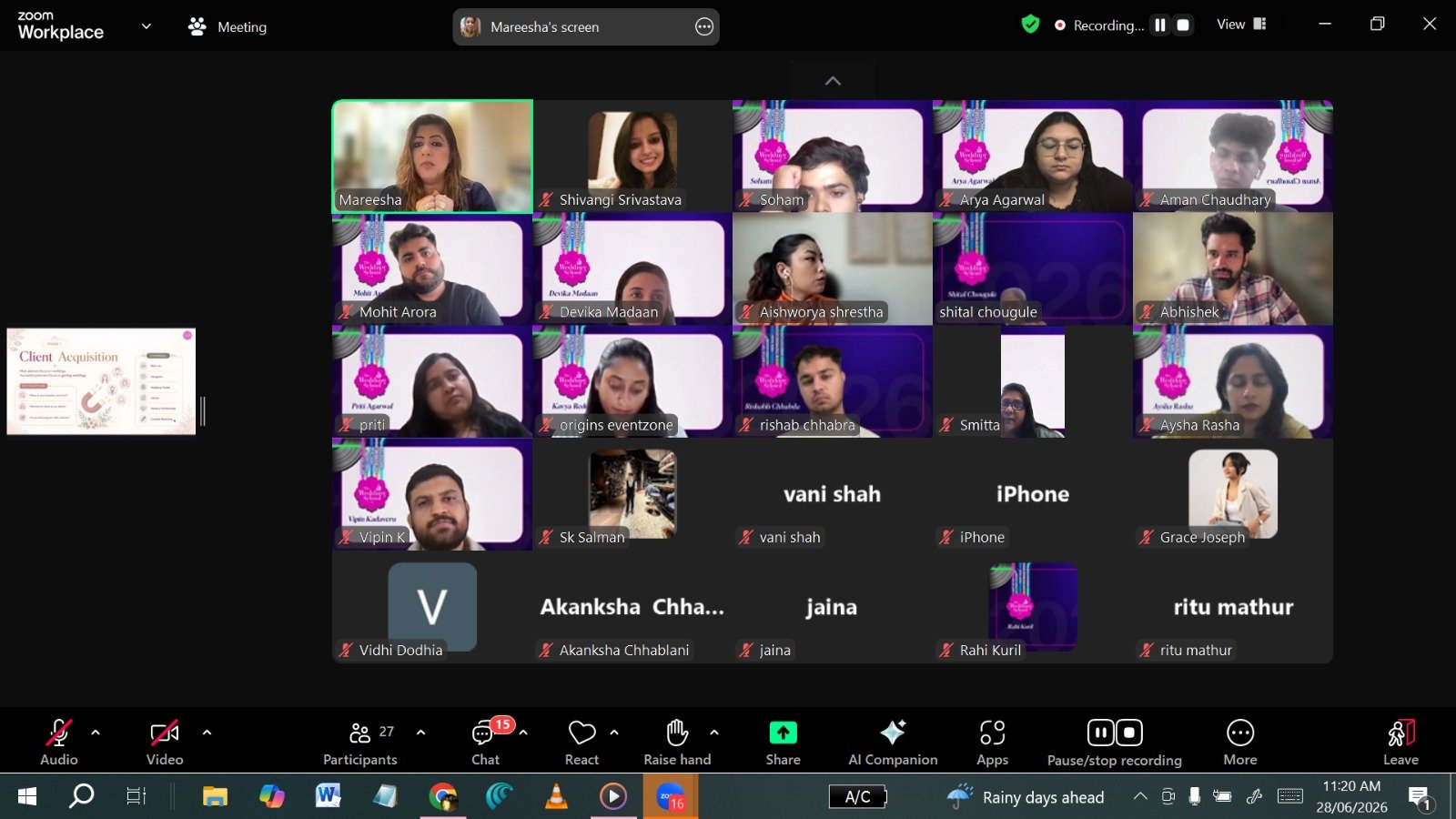
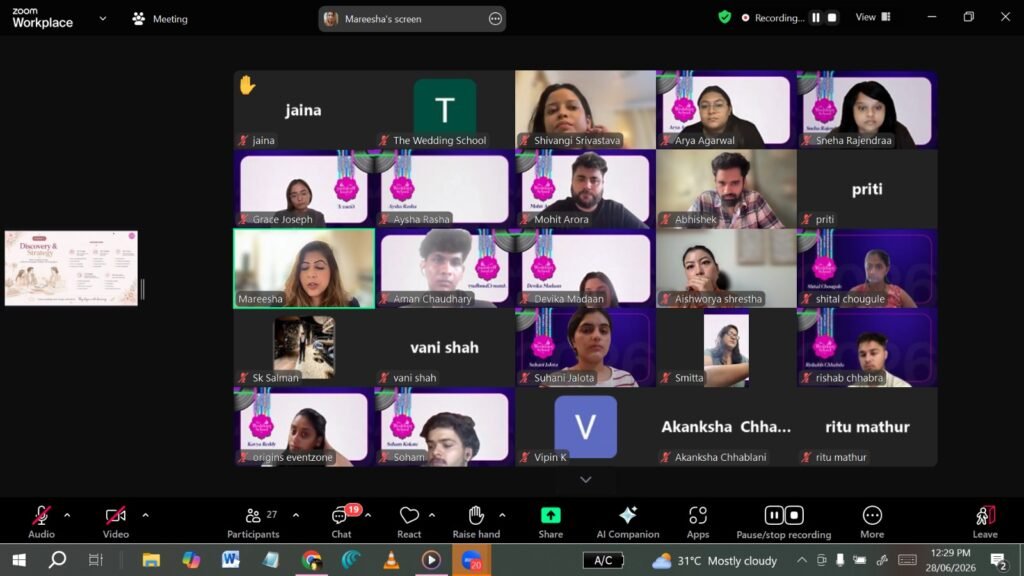
This complete lifecycle formed the focus of a recent Phases of Wedding Planning session at The Wedding School, led by Mareesha Parikh, Founder & CEO of The Wedding School.

Drawing from years of industry experience, the session went beyond textbook planning and explored the decisions, relationships and systems that shape a wedding from the first enquiry to the final closure.

One of the central lessons was simple: wedding planning is not only about creativity. A planner has to think like a professional, a problem-solver and, in many ways, an entrepreneur—whether running a business independently or working within a wedding planning company.
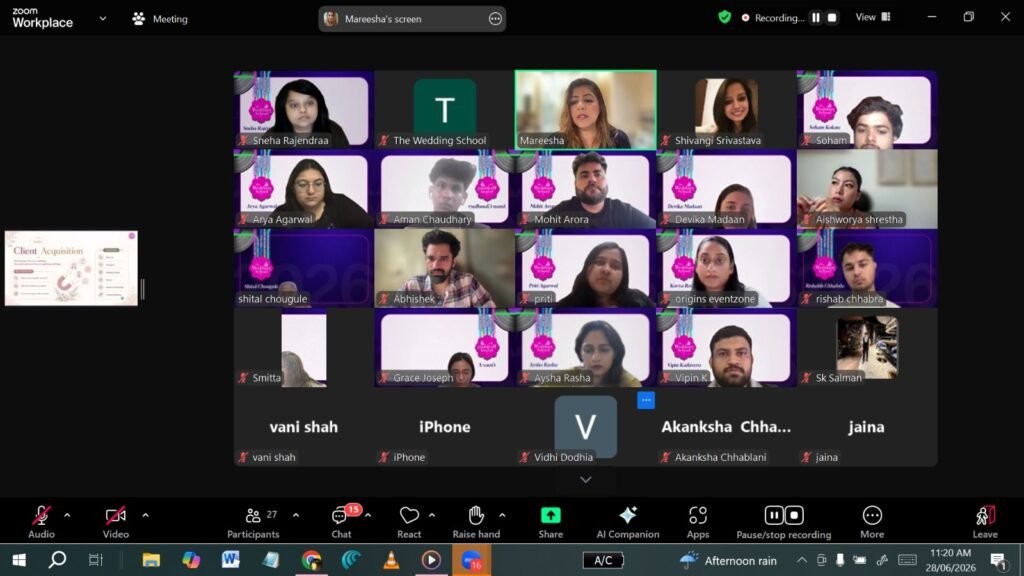
Phase 1: Client Acquisition — Where the Wedding Journey Really Begins

Before there is a brief, there has to be a client.

For emerging wedding planners, the first opportunities may come through referrals, personal networks, Instagram, wedding portals, hotels, venues or industry connections. The session encouraged students to value even smaller opportunities—an engagement, proposal, festive celebration or intimate family event can become the beginning of a professional portfolio.

The larger lesson is to build visibility before expecting enquiries.

For newer planners, referrals and organic social media can often be more relevant than immediately spending heavily on paid portals. As experience grows, marketing channels can evolve.

Wedding planning is a relationship-driven business, and professional recall takes time.

Phase 2: Conversion — Turning an Enquiry into Trust

A query does not automatically become a wedding.

Today’s families may meet several planners before finalising one. That means the first interaction has to create confidence without appearing over-eager.

The initial conversation should naturally uncover the essential details:

  • Wedding date
  • Venue status
  • Bride and groom’s cities
  • Destination preferences
  • Number of functions
  • Family structure and key decision-makers

But the session strongly emphasised that these questions should not sound like an interrogation.

A planner has to learn how to build conversation while collecting information.

The setting also matters. A Zoom meeting, family home, office or café may each involve different decision-makers and demand a slightly different style of communication and presentation.

For a client, the question is not simply, “Does this planner have good ideas?”

It is also, “Can I trust this person with my family?”

A Real Classroom Question: How Do You Break the Ice?

One of the students raised a very practical concern: what happens when you are in a client meeting before your senior or manager arrives and there is nothing obvious to talk about?

The discussion that followed was one of the most useful parts of the session.

With a younger couple, conversation can begin around their day, restaurants, travel, décor, entertainment or weddings they have attended. With parents and elders, hometowns, family backgrounds and travel can create easier entry points.

The purpose is not meaningless small talk.

It is to make the client comfortable enough to speak—and often, those casual conversations reveal more useful information than a formal questionnaire.

Phase 3: Discovery — Understanding the Family Behind the Brief

Good wedding planning begins when the planner learns to notice what the client is not directly saying.

Does the family react more strongly to décor references? Do they immediately ask about artists? Are they repeatedly concerned about hospitality and room check-ins? Does someone keep returning to timelines?

Even destination choices can reveal something important.

A family may reject Goa because several weddings have already happened there. Udaipur may not feel aspirational to someone because it is their hometown.

These observations influence the direction of the wedding.

During the session, Mareesha encouraged students to pay attention to who leads the conversation, who influences decisions and what different family members respond to.

That information should then be formally documented rather than left to memory.

Phase 4: Document Everything — The Importance of MOMs

One of the practical systems discussed was the Minutes of Meeting, or MOM.

Wedding planners may handle several projects simultaneously. Six months later, no one can reliably remember every detail from every family conversation.

A MOM becomes the record of what was discussed, agreed, observed and required.

It may capture:

  • Family preferences
  • Important decisions
  • Venue discussions
  • Guest numbers
  • Action points
  • Responsibilities
  • Timelines
  • Follow-ups

This is where professional wedding planning moves away from memory and into systems.

And systems become especially important as the number and scale of projects increase.

Phase 5: Strategy — Designing More Than Décor

Once the client is understood, the planner begins shaping the experience.

In this context, “design” does not refer only to flowers, colours or décor themes.

The planner is also designing:

  • Guest experience
  • Entertainment flow
  • Food experience
  • Hospitality
  • Invitations
  • Family movements
  • Function sequencing
  • Personalisation

A successful planner must also know when to accommodate the client and when to stand firm.

Creative preferences are subjective. A client may choose an entertainer or décor direction the planner would not personally recommend.

However, technical safety and logistics are different.

The session stressed that planners cannot casually compromise in areas that may affect guest comfort or safety. Production structures, transport quality and technical execution require professional responsibility.

Phase 6: Venue Recce — Learning to Read a Space Professionally

Once the project is confirmed, the venue needs to be studied carefully.

A wedding venue recce is much more than taking pictures of a ballroom.

The planner begins reading the property from the guest’s point of view—arrival, porch, lobby, event spaces, transitions and movement.

If the venue has already been selected, the planner may visit independently instead of asking the family to return.

Students were also encouraged to continuously research hotels and venues even before receiving a client enquiry.

The exercise recommended during the session was simple: regularly study new properties, save the information and gradually build a personal database.

That knowledge eventually allows a planner to speak about destinations and venues with far greater confidence.

Phase 7: Timelines — Never Promise What You Cannot Deliver

One of the strongest professional lessons from the session concerned timelines.

Young planners often make the mistake of giving aggressive deadlines simply to impress a client.

But promising décor closure in two weeks when the actual process may take two months does not make the planner look efficient—it eventually damages trust.

Professional timelines need to account for dependencies.

An invitation may depend on a designer and printer. Décor involves concepts, presentations, revisions and vendors. Entertainment depends on availability and approvals.

The better approach is to create systems from the beginning and communicate realistic timelines confidently.

A client may appreciate speed, but they remember missed commitments far longer.

Phase 8: Lock the Things That Cannot Wait

Some decisions should be taken early because availability is limited.

The session identified important elements such as:

  • Makeup artists: premium professionals can get booked early.
  • Photography and videography: another date-dependent category that should not be unnecessarily delayed.
  • Shadows: team members assigned closely to the bride, groom and important family members.
  • Anchor: the right host can influence the energy, flow and guest engagement of an event, which is why tentative date blocking can be useful.

The broader learning is important: every wedding element does not have the same deadline.

A planner must know what can wait and what needs to be secured immediately.

Understanding Service Through Shadows and RSVP

The discussion around shadows and RSVP management gave students another view of wedding planning—one centred entirely on service.

A shadow may assist the bride, groom, parents or other key family members throughout the wedding, helping coordinate their requirements and movements.

Students were encouraged to experience this role at least once because it changes how they understand servicing.

The same applied to RSVP calling.

Calling guests teaches patience, communication and the realities behind managing hundreds of people.

One of the strongest reminders from the class was that planners can become so involved in décor and entertainment that they forget who the wedding experience is ultimately being created for: the family and their guests.

Phase 9: Production and Execution — When Every Department Comes Together

Eventually, the planning reaches the floor.

This is where the planner’s systems, team and vendor relationships are tested.

Execution involves managing several departments simultaneously while ensuring that the visible celebration feels seamless.

Another important idea discussed was knowing your own weaknesses.

If a planner is strong in client servicing and ideas but weak in production, the answer is not to pretend otherwise. The professional decision is to bring in a stronger production person.

Building the right team often means working with specialists who know more than you in their respective areas.

That does not weaken the planner.

It strengthens the wedding.

Phase 10: The Final Goodbye — And the Beginning of the Next Wedding

The professional lifecycle does not end with the final function.

A successful wedding should leave the family with enough confidence and goodwill that, when another celebration happens, they think of the same planner again.

That recall comes from far more than décor.

It comes from communication, timelines, guest experience, vendor coordination, professionalism and the ability to handle difficult situations without transferring the pressure to the family.

The last goodbye may close one project.

But handled well, it can also create the next one.

Learning the Process Behind the Celebration

Understanding the phases of wedding planning changes the way a student looks at a wedding.

It shifts the focus from individual functions to the complete journey of acquiring a client, understanding the family, creating systems, planning the experience and executing it professionally.

Through its Wedding Planning Course, The Wedding School helps students understand these real working processes while also building knowledge across hospitality, décor, production, entertainment and client servicing.

Before the Wedding Season Begins: How Professional Planners Prepare for the Busiest Months of the Year

For guests, wedding season begins when the invitations arrive. For a professional wedding planner, it starts months earlier.

Long before the first baraat, planners are already researching destinations, revisiting hotels, meeting décor and production partners, discovering new artists, building mood boards and preparing ideas for celebrations that have not even been briefed yet.

That preparation matters because peak wedding season leaves very little room to begin from scratch.

A strong planner enters the season with knowledge, references, relationships and systems already in place. When the right enquiry arrives, the work is not beginning—the groundwork has already been done.

Start with the Season, Not Just the Confirmed Weddings

Before working project by project, planners need a clear picture of the months ahead.

Which wedding dates are expected to be busiest? Which destinations are likely to see strong demand? Where is the internal team already committed? Which weekends could have multiple projects running simultaneously?

A master season calendar should map confirmed weddings as well as tentative projects, travel dates, presentation deadlines, venue recce schedules and important vendor availability.

This gives the planner one essential advantage: visibility.

During the peak Indian wedding season, several projects may be moving at different speeds at the same time. One family may still be deciding its destination while another is closing décor and a third is preparing for execution.

The season has to be planned before it becomes busy.

Build a Destination Bank Before the Client Asks

Destination knowledge is one of the strongest assets a wedding planner can build before the season begins.

A client may suddenly ask:

  • “Can we consider Udaipur instead of Jaipur?”
  • “What other properties can work around Goa?”
  • “Can we do something closer to Mumbai?”
  • “What would work for 250 rooms?”

That is not the moment to begin searching from zero.

Professional planners should continuously study destinations and maintain an updated venue and hotel database covering cities such as Jaipur, Udaipur, Goa, Jaisalmer, Jodhpur and other emerging wedding destinations.

For every property, useful information includes:

  • Room inventory and accommodation capacity
  • Indoor and outdoor event spaces
  • Approximate guest capacities
  • Airport and road connectivity
  • Weather considerations
  • Setup and dismantling restrictions
  • Sound and timing regulations
  • Backup spaces
  • Nearby hotels for overflow guests
  • Unique experiences available around the destination

A planner should also think beyond the obvious venue.

If the client chooses a particular destination, what can guests experience around it? Can there be a welcome dinner somewhere unexpected? A family brunch? A local cultural experience? A short post-wedding stay?

Destination planning becomes far stronger when a planner understands the place, not simply the hotel.


Refresh Your Décor Ideas Before the Season

One of the biggest mistakes planners can make is entering a new season with last season’s presentation library.

Clients today consume wedding content constantly. By the time they meet a planner, they may already have saved hundreds of references.

The planner therefore needs to arrive with something more considered.

Before wedding season begins, creative teams should spend time researching:

  • New décor concepts
  • Fresh colour stories
  • Floral directions
  • Stage and mandap formats
  • Ceiling treatments
  • Tablescapes
  • Entrance experiences
  • Lounge concepts
  • Lighting ideas
  • Materials and fabrication possibilities

This does not mean copying whatever is trending.

The objective is to understand what is changing and then develop ideas that can be adapted to different families, venues and budgets.

Build New Mood Boards and Presentation Banks

A good planner does not create every presentation from a blank page.

Before the season, teams can prepare a strong bank of mood boards, references and concept directions that can later be customised for the right client.

For example, the team may develop:

  • Contemporary Indian wedding aesthetics
  • Heritage destination concepts
  • Minimal luxury celebrations
  • Modern sangeet environments
  • Intimate mehendi directions
  • Cocktail and after-party moods
  • Outdoor pheras and mandap inspirations
  • Welcome dinner experiences

The important word is customised.

A mood board should become a starting point—not a recycled presentation given to every family.

Once the client brief is understood, the team should refine the colours, details, materials, entertainment and guest experience to reflect that particular wedding.

Pre-season preparation simply allows the creative process to move faster and more intelligently.

Update the Artist and Entertainment Bank

Wedding entertainment moves quickly.

An anchor who was relatively unknown last year may suddenly become highly sought-after. A new live act may enter the market. Regional performers may become relevant for destination weddings. New formats may emerge for welcome dinners, sangeets and after-parties.

Planners should therefore enter the season with an updated artist and entertainment database.

This can include:

  • Anchors
  • Singers and live bands
  • DJs
  • Choreographers
  • Dancers
  • Folk and regional performers
  • International acts
  • Instrumentalists
  • Ambient entertainment
  • Interactive guest experiences

It is equally important to understand what each artist requires.

What is the approximate commercial range? What technical rider is involved? How much rehearsal time is required? Does the act travel with a large team? Does it suit 100 guests or 1,000?

Knowing an artist’s name is not enough.

A professional planner should understand where that artist fits into a wedding experience.

Meet Décor, Production and Vendor Partners Before Everyone Gets Busy

Wedding season should not be the first time you speak to your vendors after months.

Pre-season is the right time to meet décor houses, production teams, caterers, photographers, entertainment agencies, transport partners and gifting vendors.

Ask what is new.

What new inventory has the production company acquired? What fabrication techniques is the décor team experimenting with? Which lighting products are available this season? Has the caterer developed a new service format? Which artists are now being represented?

These conversations build two things simultaneously: knowledge and relationships.

Sometimes a new creative direction for a wedding begins not on Pinterest but during a conversation with a vendor who shows you something they have recently developed.

Visit New Hotels and Revisit Familiar Ones

Venue knowledge should also be refreshed before the season.

A property you worked at last year may have renovated its ballroom, changed its policies or opened a new event space.

A new hotel may have entered the market entirely.

Planners should schedule property visits and recces even when there is no immediate wedding confirmed.

Look at the property as a professional:

  • Where do guests arrive?
  • How does luggage move?
  • Where can registration happen?
  • Which lawn works better at sunset?
  • Where can the baraat assemble?
  • How much setup time will décor receive?
  • Where will production enter from?
  • What happens if it rains?

These observations allow the planner to recommend a venue with confidence rather than simply repeating information from a brochure.

Prepare Different Ideas for Different Kinds of Weddings

Not every client arriving during wedding season will want the same scale of celebration.

A planner may receive one enquiry for an intimate 120-guest destination wedding and another for a 700-person multi-day celebration.

Pre-season ideation should therefore cover different formats.

Prepare ideas for:

  • Intimate weddings — personal detailing, curated dining, smaller entertainment formats and high-touch hospitality.
  • Large destination weddings — complex logistics, rooming, artist management, production and multiple venues.
  • Cross-cultural weddings — ceremonies, rituals, food and guest experiences that respectfully represent both families.
  • Modern city weddings — clever venue transformation, tighter timelines and strong production planning.

The better prepared the idea bank, the easier it becomes to respond thoughtfully when different kinds of clients arrive.

Prepare the Team, Not Just the Presentation

Creative preparation has to be supported by operational preparation.

Before the season begins, planners should decide who is handling client servicing, hospitality, décor, production, entertainment, logistics and vendor coordination.

Freelancers and additional execution teams should be identified before the peak dates.

The season should also begin with updated working formats:

  • Minutes of Meeting
  • Master wedding timelines
  • Vendor trackers
  • Guest and rooming sheets
  • Transport plans
  • Production checklists
  • Payment trackers
  • Responsibility charts

Beautiful ideas require disciplined systems behind them.

Plan the Guest Experience in Advance

One of the most important areas to revisit before wedding season is hospitality.

Guests remember whether their car arrived, whether their room was ready and whether someone was available when they needed help.

Planners should therefore review their RSVP processes, airport desks, transport systems, hospitality teams, rooming formats, welcome hampers and family-shadow structures.

Guest experience should be planned with the same seriousness as décor.

A stunning ballroom cannot compensate for an uncomfortable arrival.

Prepare for the Unexpected Before It Happens

Peak wedding season will always bring surprises.

Rain. Flight delays. Traffic. Vendor delays. Late ceremonies. Last-minute guest additions.

The objective is not to predict every problem.

It is to create enough backup systems that common problems do not become emergencies.

Strong planners already know their alternate indoor venue, backup transport resource, secondary production contact and escalation structure.

Preparation creates calm.

Wedding Season Is Won Before It Begins

The strongest planners do not wait for a brief to start learning.

They are studying hotels before a destination enquiry arrives. They are discovering artists before the sangeet conversation begins. They are creating mood boards before a client requests a presentation. They are meeting vendors before everyone’s calendars are full.

That is the difference between reacting to wedding season and being ready for it.

Peak season eventually tests execution, but much of that execution is determined by the work completed quietly in the months before.

Preparation Is Where Professionalism Begins

The strongest wedding season usually starts months before the first wedding date—with destination research, fresh ideas, vendor relationships, updated presentations, strong teams and better systems.

At The Wedding School, students are trained to look at wedding planning from this professional perspective. Through its Wedding Planning and Wedding Décor Design courses, TWS helps aspiring professionals develop the creative thinking and practical understanding required to prepare for, plan and execute real weddings.

India’s Best Wedding Makers Conclave 2026: The Conversations Shaping India’s Luxury Wedding Industry

India’s wedding industry has always been admired for its scale, craftsmanship and ability to transform celebrations into extraordinary experiences. What is becoming equally significant, however, is the professional ecosystem working behind those celebrations.

That ecosystem came together at India’s Best Wedding Makers (IBWM) Conclave 2026, held on 29–30 August 2026 at the Jio World Convention Centre, Mumbai. The expanded two-day edition brought wedding professionals, entrepreneurs, hospitality leaders, designers, artists and creators together to discuss the business, creativity and future of India’s luxury wedding industry. The programme included industry conversations, networking experiences, showcases and the IBWM Honours.

For wedding planners, décor designers and professionals preparing to enter this industry, IBWM 2026 offered something valuable: a view of weddings beyond the finished photographs. It highlighted the relationships, specialist expertise and business thinking that make large-scale celebrations possible.

An Industry That Is Becoming More Connected

A modern Indian wedding can involve dozens of independent specialists.

There are planners, décor designers, hotels, caterers, production companies, entertainment teams, photographers, stylists, invitation designers, logistics partners, hospitality professionals and destination specialists—all working towards one celebration.

IBWM 2026 reflected this diversity. Conversations across the two-day conclave included hospitality, entertainment, fashion, design, food and beverage, photography and storytelling, while also looking at changing client expectations and the evolving definition of luxury.

Prateek Tandon, Co-Founder of India’s Best Wedding Makers, described the objective as bringing the wedding industry “together on one platform.”

For the professional wedding planner, that idea is especially relevant.

Planning a wedding is no longer about simply appointing individual vendors and managing a checklist. Every department affects another. Entertainment depends on production. Décor has to work with venue infrastructure. Hospitality depends on transport and rooming plans. Photography requires access, lighting and carefully managed timelines.

The planner increasingly becomes the point where all these disciplines meet.

The Meaning of Luxury Is Changing

One of the most important themes highlighted at IBWM 2026 was the changing definition of luxury.

Luxury weddings will, of course, continue to feature extraordinary venues, elaborate design and premium experiences. But scale alone no longer defines a sophisticated celebration.

Today, the details matter equally.

A beautifully planned guest arrival, thoughtful room amenities, a personalised menu, smooth transitions between functions or an entertainment experience designed specifically for the family can have as much impact as a monumental décor installation.

This reflects a wider shift within the luxury wedding industry in India. Clients increasingly expect celebrations to feel individual rather than formula-driven.

That changes the planner’s role.

Instead of asking only, “What can we add to make this wedding bigger?”, professionals increasingly have to ask, “What will make this wedding feel more personal?”

Understanding the couple, the family, the guest profile and the purpose of each celebration becomes essential.

That is where professional judgement becomes as valuable as creativity.

Experience Is Now Part of the Planning Language

IBWM 2026 also placed attention on the growing role of experiences and entertainment within weddings.

Entertainment today is rarely restricted to one performance during a sangeet.

It can influence how guests enter a venue, how a couple is introduced, how one function transitions into another and how the overall celebration is remembered.

Likewise, hospitality is no longer simply about arranging rooms and transport. It begins before the guest arrives and continues until the last departure.

Food has evolved from catering into curated dining experiences. Décor has moved beyond ornamentation towards spatial storytelling. Photography and content teams are expected to understand not only what happened, but how the couple wants the wedding remembered.

For an aspiring wedding planner or wedding décor designer, this interconnectedness is an important lesson.

Knowing your own area of expertise is necessary. Understanding how it fits into the larger wedding is what makes you valuable to the entire team.

The Wedding School at IBWM 2026: Bringing Industry Experience to the Conversation

The Wedding School was also represented at India’s Best Wedding Makers Conclave 2026, with its leadership participating in two industry discussions.

Mareesha Parikh, Co-Founder & CEO of The Wedding School, was a speaker at the Entertainment Table, while Hemant Kale, Director at The Wedding School, participated as a speaker at the Client’s Table.

Their presence at IBWM 2026 reflects The Wedding School’s continued connection with professional industry platforms that bring together voices from planning, design, entertainment, hospitality and the wider wedding ecosystem.

For students, such industry participation creates an important connection between professional education and the conversations taking place within India’s evolving wedding business.

The Great Indian Wedding Book 6.0

Another important moment at IBWM 2026 was the unveiling of The Great Indian Wedding Book 6.0, the latest edition of the publication dedicated to luxury wedding trends, ideas, craftsmanship and professionals.

Actor Tiger Shroff joined the event for the unveiling, while Mouni Roy and Wamiqa Gabbi presented honours during the evening. The IBWM Honours were hosted by Amyra Dastur.

Atul Pandey, Publisher of The Great Indian Wedding Book, described the publication as being about “documenting Indian weddings at their very best.”

That statement carries particular relevance today.

Wedding media frequently celebrates the visible side of an event—the bridal look, décor, entertainment and venue. But behind each image is a large network of professionals responsible for translating an idea into reality.

Industry platforms such as IBWM help bring greater recognition to those businesses and specialists.

Recognising the People Behind the Weddings

The IBWM Honours 2026 recognised professionals and companies from across the wedding and celebrations ecosystem.

Among those named were Terence Lewis Contemporary Dance Company, Parthiv Gohil, Shantnu Nikhil, Rimple & Harpreet, JADE by Monica & Karishma, 7x Weddings, Wizcraft, Touchwood Group, Seven Steps Weddings – 70 EMG, Omung Kumar, Abhinav Bhagat Events, Ram Bherwani Weddings, Foodlink Luxury Catering, The Leela Palace Udaipur, Suryagarh Jaisalmer and Fairmont Mumbai, alongside several other wedding, hospitality, fashion and design names.

The range of honourees itself reflects how broad the wedding business has become.

A luxury wedding can bring together professionals from entertainment, fashion, hospitality, catering, design and experiential events. The planner’s job is to understand how these specialist worlds can work together while protecting the overall vision of the celebration.

That requires far more than creative instinct.

It requires communication, commercial awareness, negotiation, planning systems and the ability to lead multiple teams under pressure.

What Future Wedding Professionals Can Learn from IBWM 2026

Industry conclaves are valuable not because they provide one formula for the future, but because they reveal what experienced professionals are paying attention to.

For emerging wedding planners, several lessons stand out.

Understand the complete wedding ecosystem. A planner does not have to become an expert in every department, but must understand enough about hospitality, production, décor, entertainment and logistics to make informed decisions.

Build genuine professional relationships. The Indian wedding industry remains deeply relationship-driven. Strong relationships with venues, hotels and vendors can improve communication, problem-solving and execution.

Learn the business behind the celebration. Beautiful ideas need budgets, timelines, contracts, teams and processes. Creativity without commercial understanding is difficult to sustain professionally.

Stay close to changing client expectations. What couples wanted five years ago may not be what families expect today. Successful planners continue observing how guest behaviour, hospitality standards and the meaning of luxury are changing.

Never stop learning from the industry. Destinations evolve. New hotels open. Production possibilities change. Entertainment formats shift and new professionals enter the market.

The professionals who remain relevant are usually the ones who remain curious.

Why Platforms Like IBWM Matter

IBWM 2026 demonstrated that India’s wedding industry is increasingly being recognised as a serious creative and commercial ecosystem rather than simply a collection of event vendors.

Its expanded two-day format was designed to move beyond traditional networking towards deeper conversations, collaboration and ideas around the future of luxury weddings.

For aspiring professionals, that evolution matters.

The industry needs people who can balance creativity with organisation, client relationships with commercial realities and ambitious ideas with disciplined execution.

The wedding itself may last a few days.

The professional thinking behind it takes years to develop.


From Industry Conversations to Industry Education

Based in Mumbai and connected with learners across India through live online and hybrid learning, The Wedding School offers professional Wedding Planning and Wedding Décor Design courses for aspiring planners, working professionals, entrepreneurs and those already associated with the events industry.

Through industry-led learning, students gain exposure to wedding planning processes, client management, hospitality, décor, entertainment, budgeting, production, vendor coordination and on-ground execution.

For anyone exploring a wedding planning course in India, an online wedding planning course, a wedding planning course in Mumbai or professional wedding décor design education, The Wedding School connects structured learning with the realities of the working wedding industry.